Guides ·
Wine Tasting in Heraklion: Where to Go and What to Expect
Most visitors meet Heraklion as an airport, a ferry port, or the gateway to Knossos. Fewer realise that the hills starting just past the city's southern edge hold more wineries than any other part of Crete. The vineyards here have unusual credentials: archaeologists date a grape press found at Vathipetro, south of Archanes, to around the 16th century BCE, which means wine was being made in these specific hills three and a half thousand years ago.
For a traveller, the practical appeal is compactness. Where other wine regions ask for long drives between estates, the Heraklion wine villages line up along connected valleys, so a single unhurried day covers real variety: a modern architect-designed tasting room, an organic family estate, and a cellar full of reviving native grapes, all without retracing your route. This guide covers the villages, the wineries, the logistics and the small decisions that make the difference between a pleasant stop and the best day of the trip.
Quick Summary
The best wine tasting in Heraklion happens south of the city, in the villages of Peza, Archanes and Dafnes. This is the largest concentration of wineries on Crete, home to three protected designations of origin and a cluster of producers sitting within a few kilometres of one another. Plan one relaxed day for two or three estates, book visits ahead, and decide early whether you are driving or joining a guided tour, because the pours here are generous. Spring through autumn is the season, and the local grapes to look for are Vidiano and Vilana in white, Kotsifali, Mandilaria and Liatiko in red. For how these villages compare with tastings elsewhere on the island, our best wine tasting in Crete guide ranks the lot.
Why Heraklion Is Crete's Wine Capital
Geography does the heavy lifting. A series of north-south valleys channels cool air from the Cretan Sea into the vineyards through the hot months, and the poor, rocky limestone soils force vines to work, which concentrates the fruit. Those conditions earned the area three protected designations of origin: Peza, covering reds of Kotsifali and Mandilaria plus whites of Vilana, Archanes, for the same classic red blend, and Dafnes, dedicated to the ancient red grape Liatiko.
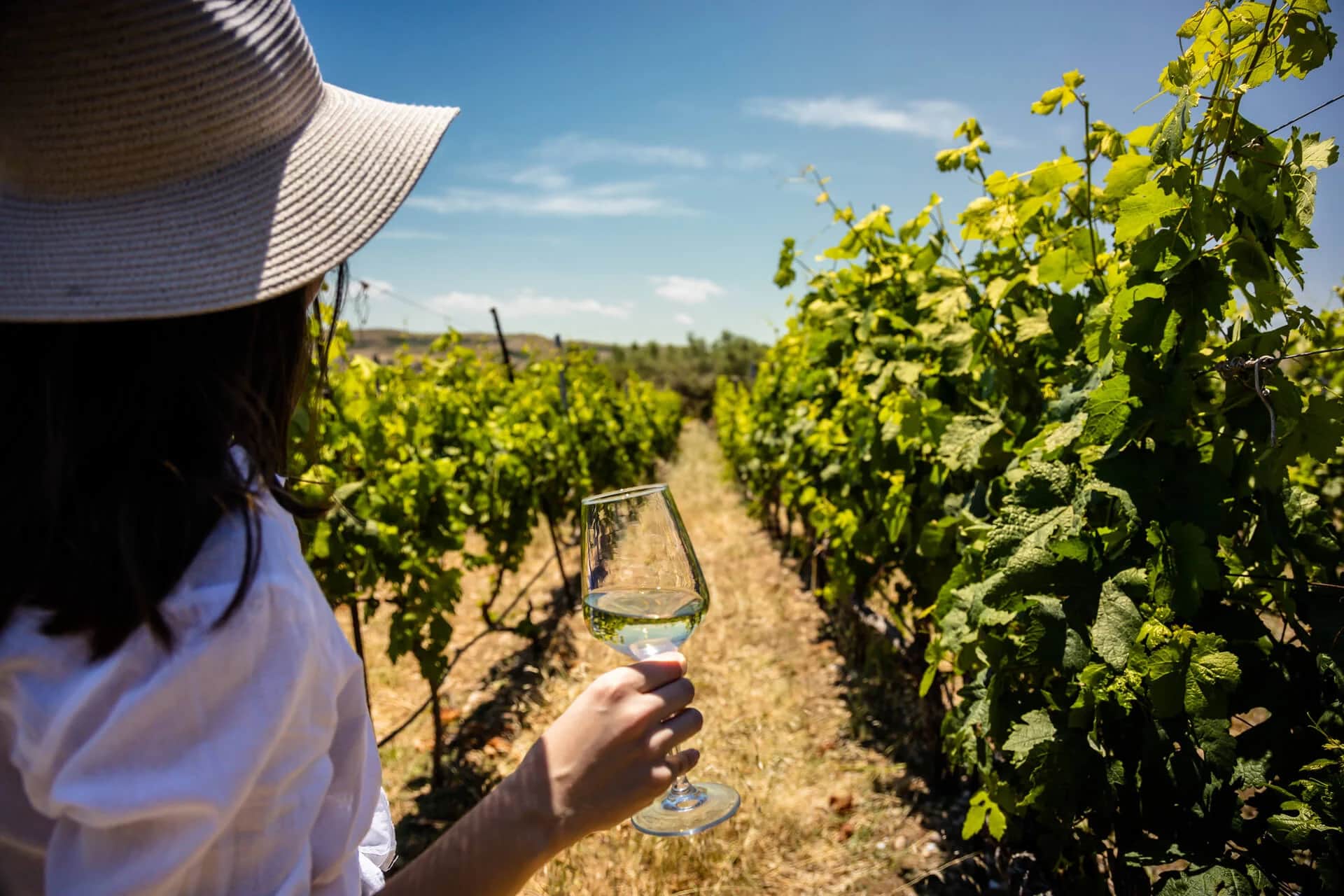
History helped as well. This countryside supplied wine through the Minoan, Roman and Venetian eras, and when phylloxera forced Cretan viticulture to restart in the late 20th century, the replanting energy centred here. The result today is a region where a winery founded in 1966 counts as an elder statesman and where several nearly extinct varieties came back from a handful of surviving vines. For visitors, that mix of deep history and recent reinvention means the person pouring your flight is often the same person who made the decisions in the cellar, and the stories arrive with the wine.
Wine Tasting in Heraklion: The Villages and Wineries
Three areas carry the tasting scene, and they work naturally as a single loop or as separate short outings from the city.
Peza: The Compact Cluster
Peza is the district most people should start with, because several very different wineries operate within a few kilometres of one another. Lyrarakis, founded in 1966, offers one of the island's best outdoor tastings under a pergola with mountain and vineyard views, and the family is known for reviving the rare white grapes Dafni and Plyto when both stood close to extinction. Nearby, Domaine Paterianakis is an organic estate run by two sisters, with a terrace built for long tastings and a natural line of wines worth asking about. The third contrast is Digenakis, whose cube-shaped concrete winery with floor-to-ceiling glass looks across the road to its own vines while you taste through a modern flight with local cheese. At Kounavi, a few kilometres south of Knossos, the small organic Stilianou estate works exclusively with Cretan varieties in what its family fairly calls the historical wine country of Knossos.
Archanes: Vines with a View of History
Archanes is a handsome hill town surrounded by vineyards, and its designation protects the traditional red blend of soft Kotsifali with dark, tannic Mandilaria. The town itself deserves an hour before or after a tasting, with restored stone houses, small museums and the best cluster of tavernas in the wine country. The Minoan site at Vathipetro, with its ancient wine press, sits just to the south, making Archanes the natural stop for anyone who wants the archaeology and the glass in the same afternoon. We cover the village on its own in our Archanes wine tasting guide.
Dafnes: Liatiko Territory
West of the Peza cluster, the Dafnes area is the home ground of Liatiko, one of Greece's oldest recorded grapes. It makes pale, perfumed reds that surprise people expecting a heavy island wine, and sweet versions with long local history. Family wineries receive visitors across this zone: Douloufakis is the best-known name, and at the village of Siva the organic Silva Daskalaki estate, farming here since the 1920s, makes wines in a natural style. Tasting Liatiko at the source is the kind of specific experience that separates a wine trip from a generic excursion — and if you would rather sit than tour, the private vineyard picnic at Dafnes puts the table in the middle of the vines.
What a Tasting Actually Looks Like
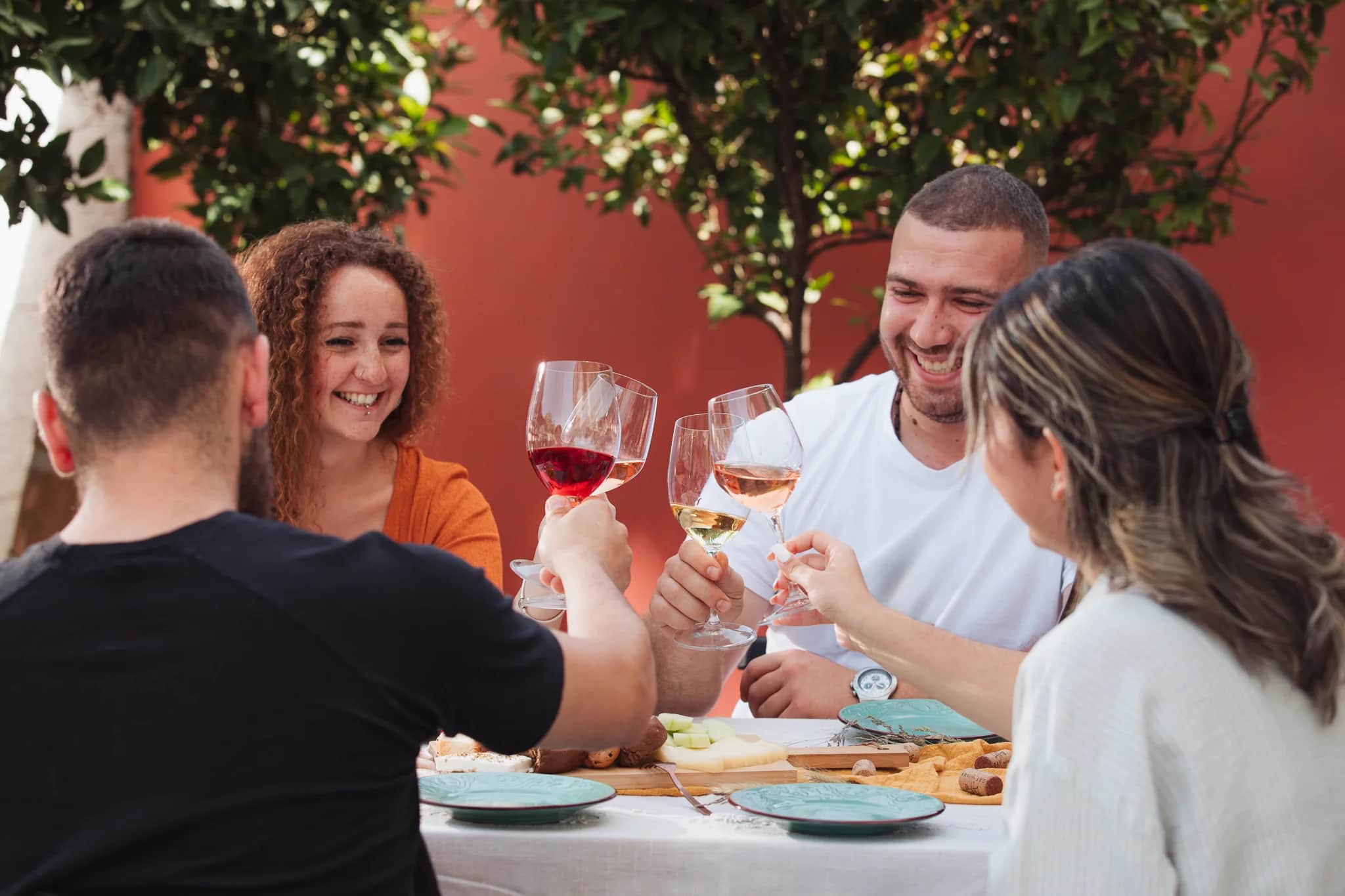
Expect more generosity than formality. A standard visit runs from a simple guided flight to a full tour of tanks, barrels and vineyard rows before the pouring starts. Food appears almost automatically: local graviera cheese, olives, rusks and olive oil at minimum, and several estates serve proper lunch on a terrace if arranged ahead. Flights commonly cover both international varieties and the locals, and the locals are the point. Ask for Vidiano if you drink white, and put Liatiko next to the Kotsifali blend if you drink red, because tasting those side by side teaches you more about Cretan wine than any label ever will. You may also meet Assyrtiko, the mineral white better known from Santorini, which several Heraklion growers now plant alongside the natives.
Two practical notes. First, appointments matter: these are working farms with small teams, and even wineries that accept walk-ins prefer warning. Second, flights of five to seven wines are normal here, so a two-winery afternoon adds up quickly — which settles the driving question for most groups before it is asked.
Heraklion tastings you can book
Food and Wine in the Villages
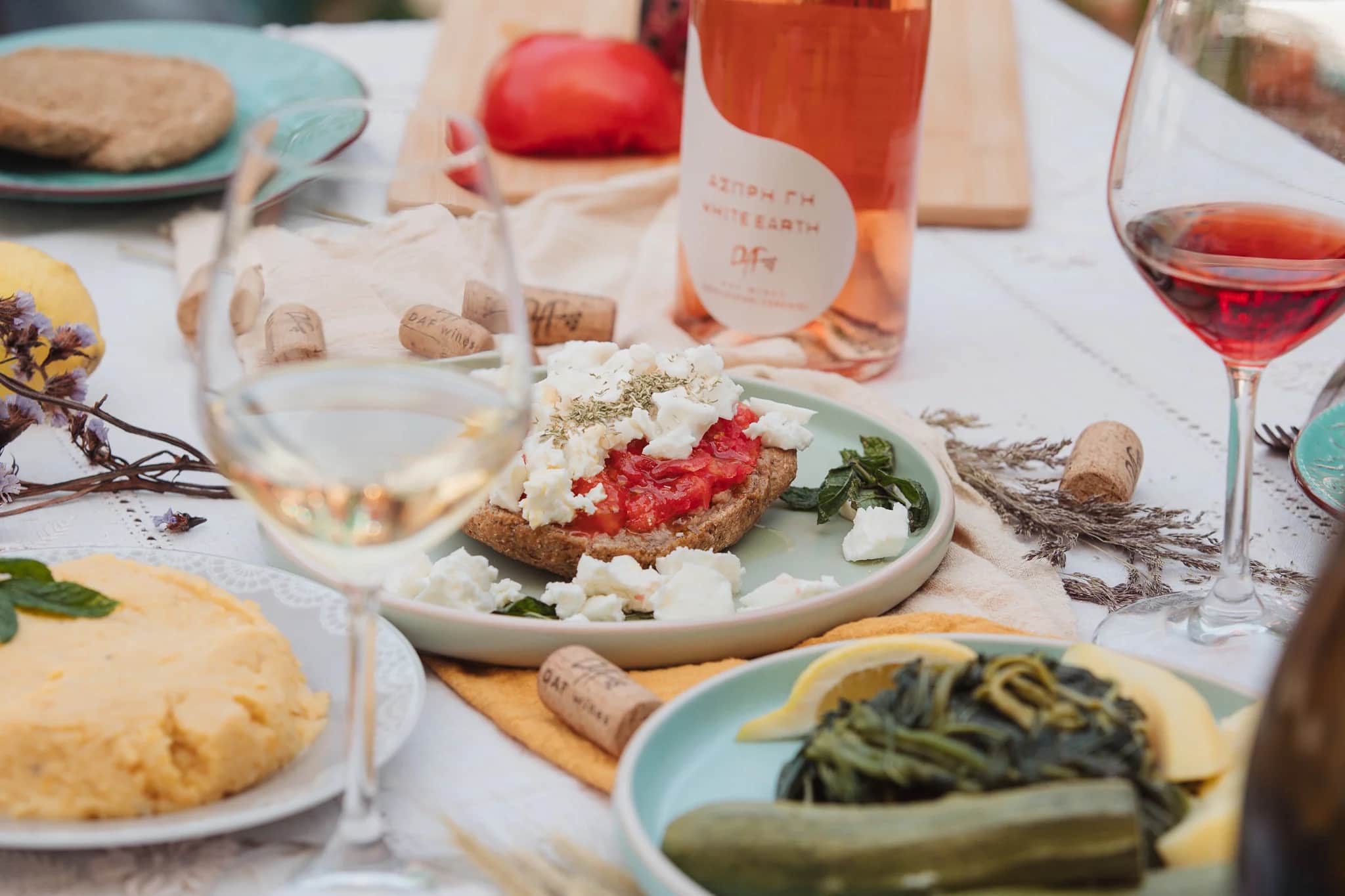
The eating around the Heraklion wine country deserves its own planning. Winery lunches, where offered, are the high point of the day: long tables on a terrace, dishes from the estate kitchen, and the wines poured next to the food they were made for. Arranged ahead, a lunch like this turns a tasting into an occasion, and it anchors the day so the driving, the appointments and the walking all point toward one unhurried table.
Outside the wineries, Archanes has the best concentration of tavernas in the area, and eating there after a morning tasting keeps the day inside the wine country instead of pulling you back to the city. Order the local red blend by the carafe and compare it with what you tasted at the source a few hours earlier. The gap between a wine served correctly at the estate and the same style poured casually over lunch is itself a small education, and it usually ends with a detour back to the winery shop before the drive home.
Weather and the Best Time to Go
The tasting season runs from April to early November. May, June, September and October give the most comfortable temperatures for walking vineyard rows, while July and August move the experience onto shaded terraces and into cool cellars, no hardship at all. Harvest arrives in late August and September, when the villages smell of crushed grapes and hosts are busiest, a fair trade for seeing the machinery of the year in motion. Winter tastings are possible with some producers by arrangement, and the region is quiet then in a way some travellers love. If your dates are flexible, aim for a weekday: the villages are calmer, hosts have more time, and the difference shows in how long the last pour lasts.
Getting There: Driving vs Guided
The wine villages sit a short drive south of Heraklion city on decent roads, and a rental car handles the loop without drama, provided one person stays with water and cheese while the others taste. Navigation is simple by Cretan standards, though rural signage rewards patience.
The guided alternative removes the sacrifice. Tours departing from Heraklion and the nearby resort coast bundle transport, appointments and translation into one booking, and a guide who knows the families adds context you cannot get from a tasting sheet. Guides also solve the quiet problem of sequencing, since they know which estate shows best in the morning, which terrace deserves the lunch slot, and which cellar makes the right final stop. On the price side, the spread is honest: a hosted winery tasting starts around €15 to €25 per person, guided half-day formats with a vineyard visit run roughly €50 to €75, and private full experiences with food sit around €120 to €160. If your group includes two or more people who actually want to taste, the maths favours the guided day quickly — we compare the organised options in our Heraklion wine tours guide, and rank the island-wide days in the best wine tours in Crete.
How to Choose Your Heraklion Wine Day
Build the day around one honest question: how central is wine to your trip? If it is the headline, book a guided loop through Peza and Archanes with a winery lunch, and add Dafnes if the schedule allows a third stop. If wine shares the day with Knossos, pick a single estate near Archanes and pair the Minoan palace with Vathipetro for a themed afternoon that connects the Bronze Age press to a working cellar. Couples tend to remember the smaller, terrace-focused estates best, while groups of friends get more from the bigger tasting rooms with long flights. Families should target wineries with gardens and outdoor space, go early, and keep it to one stop. You can compare every wine experience we list near Heraklion on one page.
Common Mistakes to Avoid
Arriving unannounced is the classic error, and it costs people the exact winery they most wanted to see. A message a day or two ahead solves it. Cramming four or five estates into one day is the second mistake, because tastings here are generous and the fourth stop is wasted on tired palates. Skipping the local grapes for familiar international names is the third: Vidiano, Liatiko and old-blend Kotsifali are the wines you cannot re-taste at home, and bottles travel well in a suitcase wrapped in beach towels. Finally, do not schedule a tasting for the hour before dinner reservations in the city. The best visits stretch, and being the group that leaves while the winemaker is opening one more bottle is its own small tragedy.
Where to Stay
Heraklion city works fine as a base, especially without a car, since tours collect from town hotels. For a wine-first trip, staying south of the city changes the character of the visit: Archanes makes a base of real charm among the vineyards, with tavernas in walking distance and wineries minutes away, and the villages around Peza put you inside the designation itself. A villa in these hills suits wine travellers particularly well, with a terrace for the evening bottle, a kitchen for slow mornings, and space to let a tasting-heavy day land softly. Two nights is the number that changes the trip: it converts the wine villages from an excursion into a base, and it means the second day can follow whatever the first one uncovered.
My Creta Villa — our own villa company — lists countryside and coastal villas around Heraklion, an easy drive from the Peza and Archanes wine villages.
Villas near the Heraklion wine villages
My Creta Villa — our own villa company
Nearby Attractions
The region stacks well with the rest of a Heraklion stay. Knossos, the largest Minoan palace on Crete, sits between the city and the wine villages, and Vathipetro extends the story with its ancient press. Archanes town rewards a wander with its restored houses and small museums, and back in Heraklion the Venetian harbour and the fortress of Koules fill the gap before an evening meal. It is entirely possible to hold a morning at a 3,500-year-old palace, an afternoon among barrels, and a sunset on the city walls inside a single day, which is the kind of range few wine regions anywhere can offer.
Wine tasting in Heraklion: frequently asked questions
What does a winery tasting near Heraklion include?
Typically a walk through the vineyard or cellar followed by a hosted flight of five to seven wines, almost always with local graviera cheese, olives, rusks and olive oil alongside. Hosted tastings start around €15 to €25 per person, and several estates add a proper terrace lunch if you arrange it ahead.
Do I need an appointment to visit a winery?
Treat it as yes. These are working farms with small teams, and even estates that accept walk-ins prefer a message a day or two ahead. Booking also gets you the family member with the best stories rather than whoever happens to be free.
Can I go wine tasting in Heraklion without a car?
Yes. Guided experiences collect from Heraklion hotels and bundle transport, appointments and translation into one booking, from roughly €50 to €75 for half-day formats and €120 to €160 for private days with food. With two or more tasters in the group, the guided day usually beats juggling a rental car and a designated driver.
Which local grapes should I ask for?
Vidiano is the white that has become Crete's flagship, with Vilana the lighter classic of Peza. In red, taste the traditional Kotsifali and Mandilaria blend next to a pure Liatiko from Dafnes — that side-by-side is the quickest education in Cretan wine.
Is harvest season a good time to visit?
Late August and September are the liveliest weeks, with the villages smelling of crushed grapes and the machinery of the year in motion. Hosts are busier, so book further ahead and expect shorter visits — or aim for May, June or October for the calmest tastings.
Final Thoughts
Wine tasting in Heraklion is the most efficient way into Cretan wine: the most wineries, the shortest distances, three designations, and grape varieties that exist almost nowhere else. Book ahead, keep the day to two or three stops, taste the locals before the internationals, and settle the driving question early. Do that, and the hills south of the city will hand you the best-value cultural experience on this side of the island.
See all wine tours in Crete