Guides ·
Best Wine Tours in Crete 2026: Compared from €15 to €160
A wine tour in Crete is a day trip, not just a tasting: transport out to the villages, a route through one or two wineries, food along the way and a ride home so nobody has to stay sober for the drive. This guide is about that day — guided versus self-drive, pickup logistics, small-group versus private, what the different formats cost and how to choose a route that matches where you are staying. If you just want a tasting without the drive — the flights, the grapes, the tasting rooms themselves — see our guide to the best wine tasting in Crete.
Why a Wine Tour Is Worth Planning
Crete is often planned around beaches, sailing trips, ancient sites and famous towns. Wine tours show another side of the island.
They take you into the countryside, where the landscape explains the food. You see why olive oil, grapes, herbs, vegetables, cheese and meat are so central to Cretan life. A winery visit also gives structure to a day inland. Instead of simply driving through villages, you have a reason to stop, taste, ask questions and understand what you are seeing.
For first-time visitors, a wine tour can be one of the easiest ways to understand inland Crete. For repeat visitors, it is a way to go deeper than the usual routes. If you want to see the whole field before reading on, you can compare all wine tours in Crete and come back to the details.
What a Tour Day Actually Looks Like
Most wine tours in Crete follow a simple rhythm.
The day often starts with pickup from a hotel, villa or meeting point. From there, the route moves inland toward a winery area. In Heraklion, this may mean central wine country around villages such as Dafnes, Archanes or Peza. In western Crete, wine routes often work from Chania toward countryside estates, olive groves and village food stops.
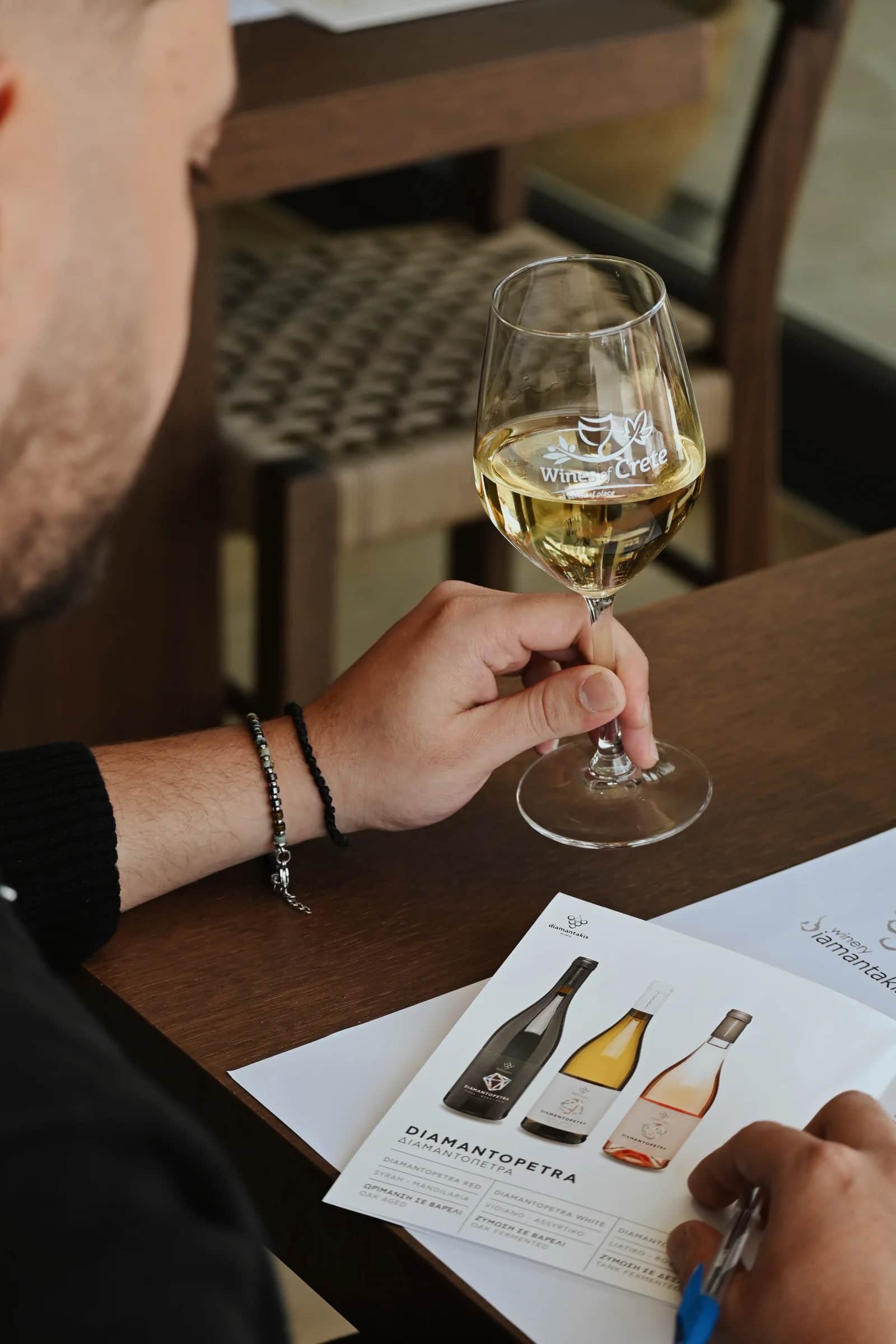
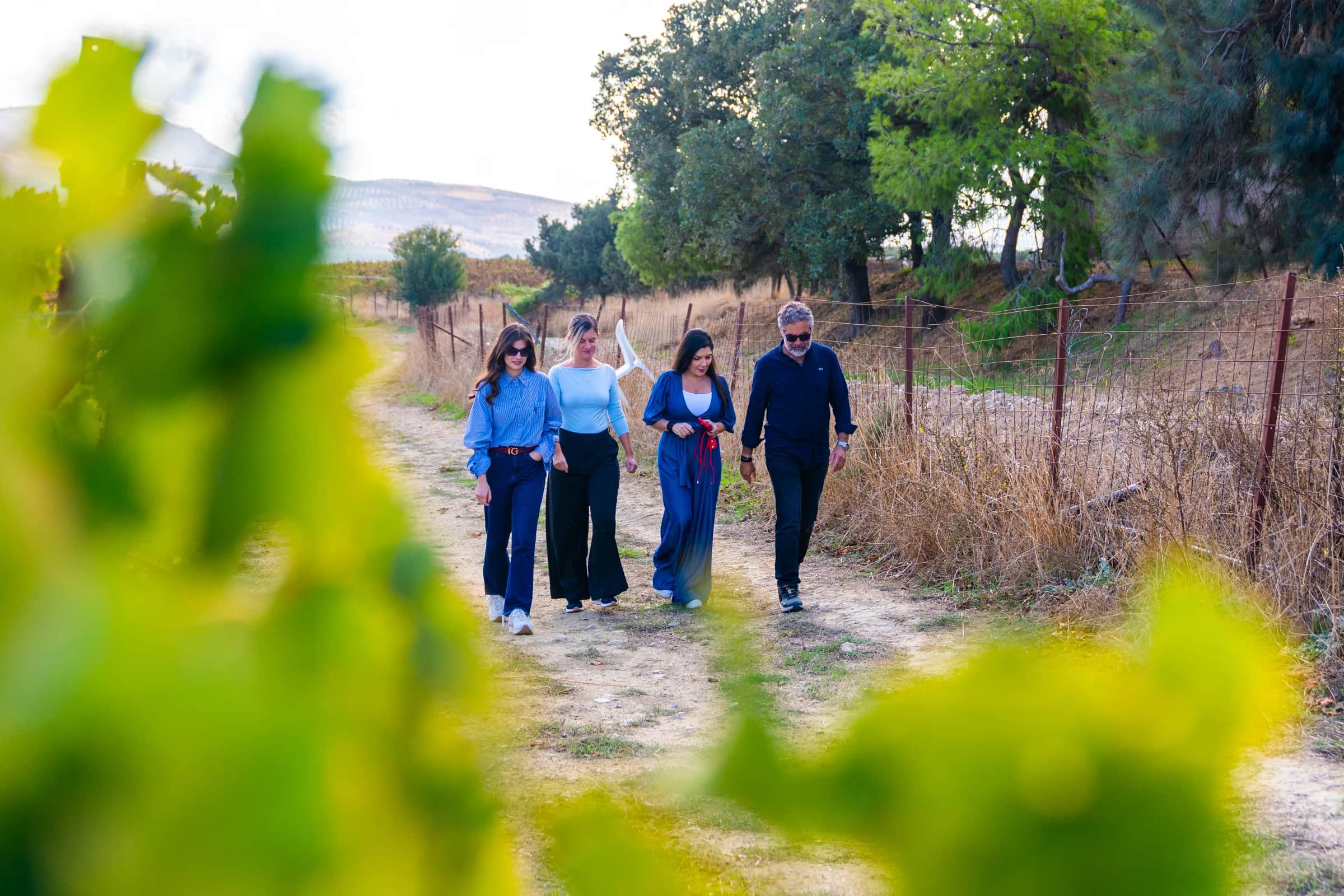
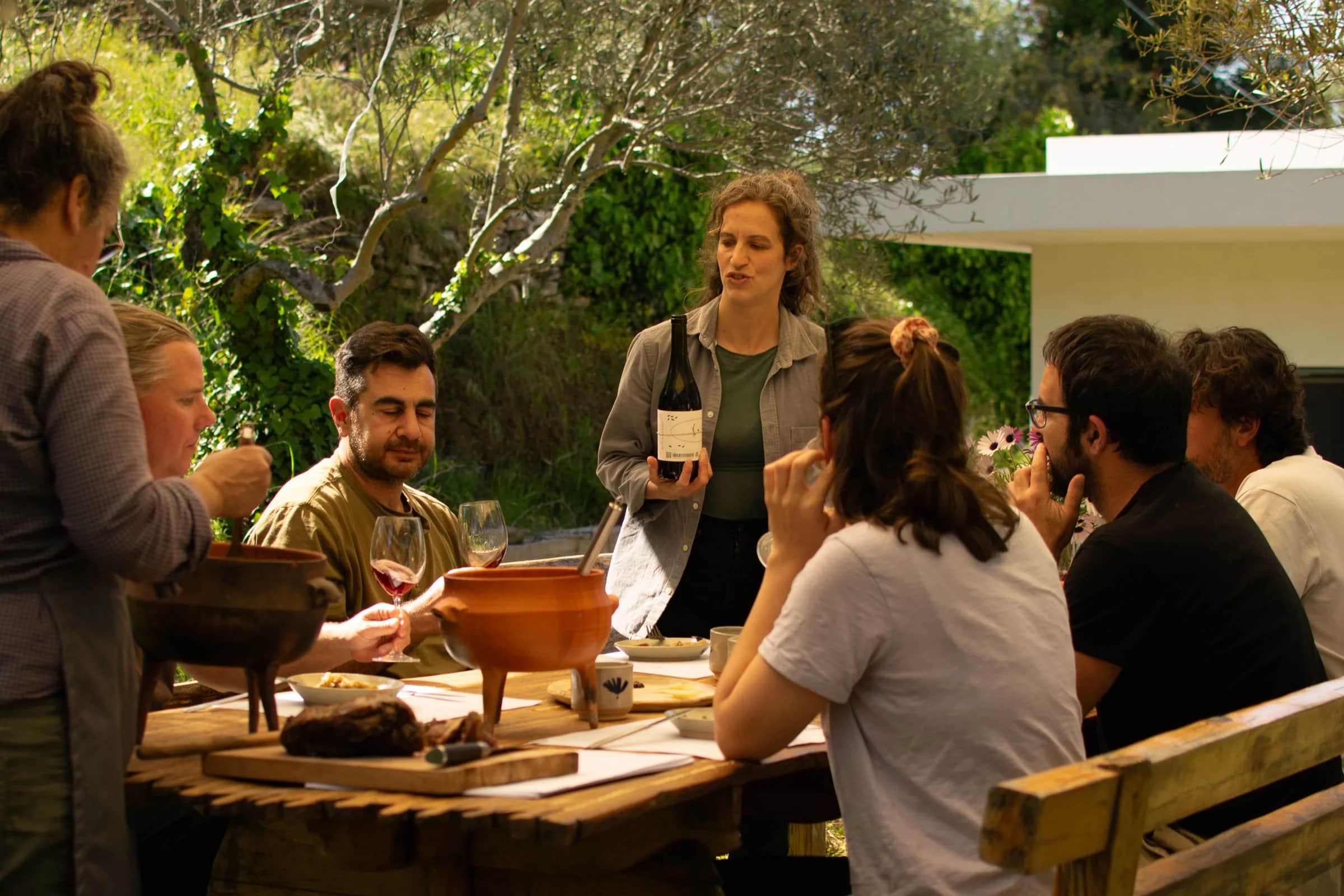
At the winery, the visit may include a short walk through the vineyards, an explanation of the production area, a cellar or tank room visit and then the tasting. A typical tasting may start with white wines, then move to rosé, reds and sometimes sweet wine or raki, with the host explaining the grapes, the harvest and the foods that work best with each glass.
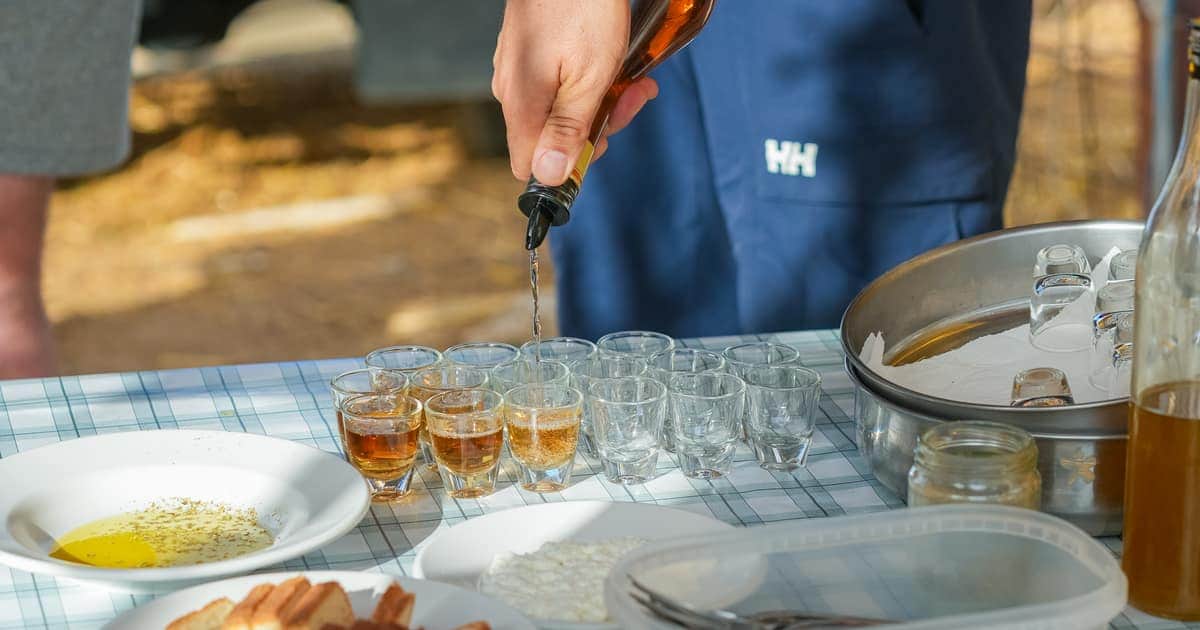
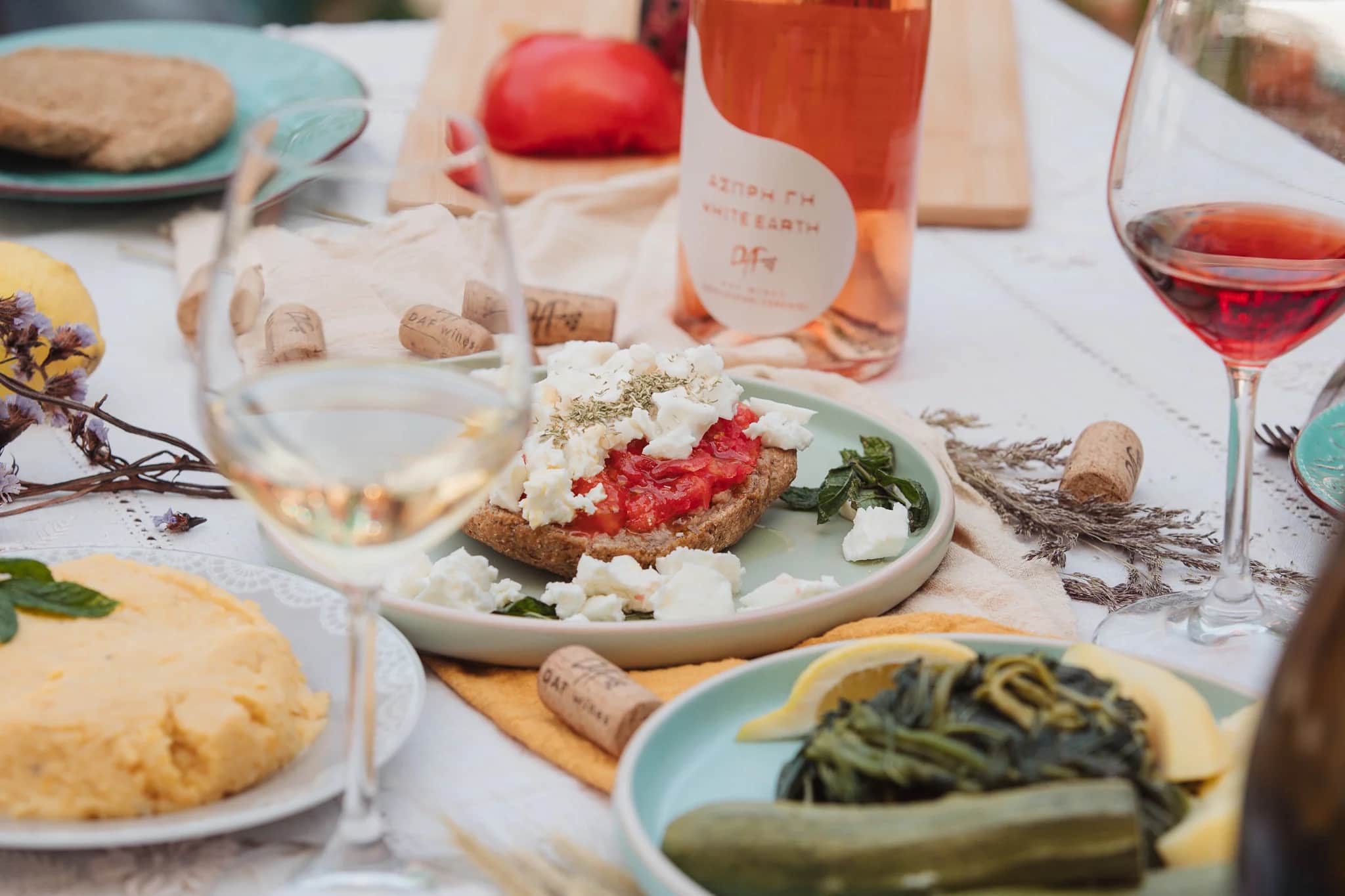
Food can make a big difference. Some tours include a small plate with rusks, olives, cheese and olive oil. Others include a proper Cretan lunch. Neither option is wrong. The important thing is to understand what you are choosing: a light tasting keeps the day short and easy, while a food and wine tour turns it into a full countryside experience.

A One-Minute Grape Primer
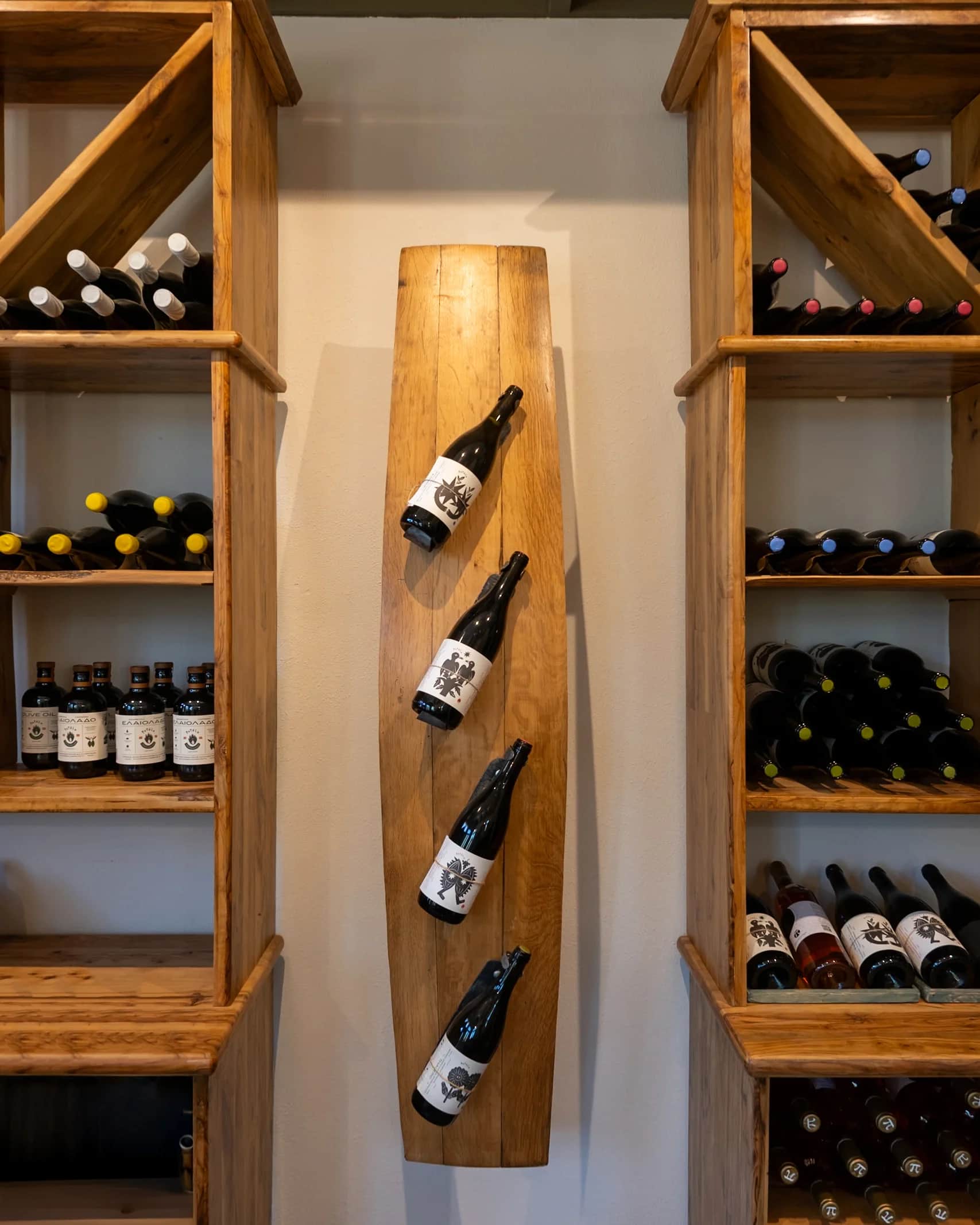
You do not need to study wine before booking a tour, but a few names help. Vidiano and Vilana are the whites you will meet first, Kotsifali and Mandilari are the classic red blend of central Crete, and Liatiko is the old variety that shows how much depth the island has. If a tour's tasting includes only familiar international grapes, it may still be enjoyable, but it will miss the most interesting part of the island's wine culture — a flight like the Petradias Collection of indigenous Cretan varieties shows what to look for.
We go through the varieties properly — Dafni, Thrapsathiri and the rest, and how to choose a tasting by grape — in our wine tasting guide, so ask your tour host about whichever one catches your eye.
More ways into Cretan wine
What a Wine Tour in Crete Costs
Wine tour prices in Crete depend less on the word "wine" and more on the format. A simple tasting, a tasting with food pairing, a full wine and olive oil route and a private wine day are not the same product.
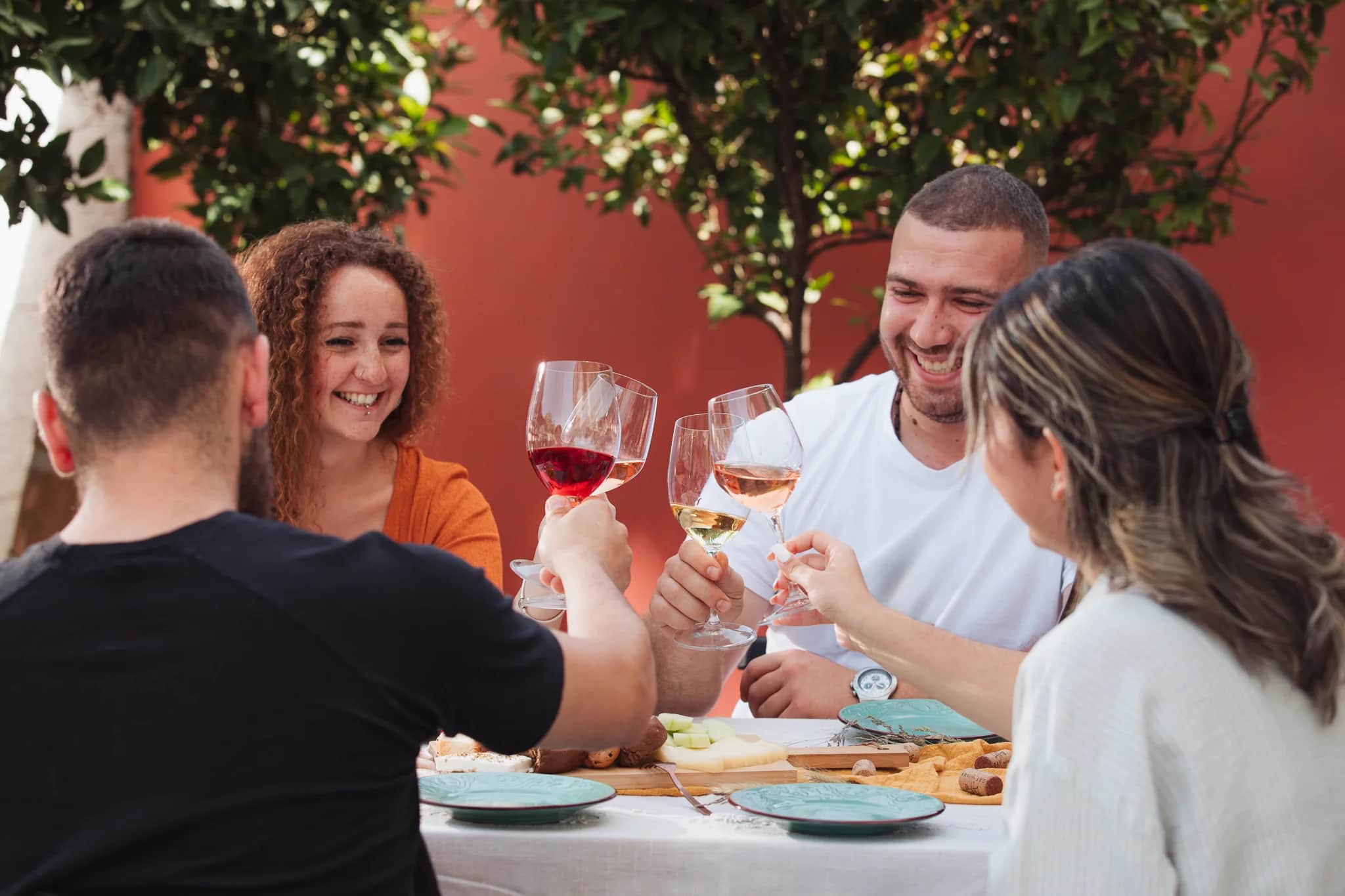
At the entry level, a straightforward flight of five Cretan wines starts from about 15 euros and works well if you have your own transport and want a focused introduction. For travellers who want food to be part of it, a tasting with proper food pairing at a family winery sits around 52 euros, and the value is in the way the host connects each glass with food and place.
Longer routes with more inclusions cost more, because you are paying for a planned day rather than a tasting: transport, a winery visit, olive oil, raki, a local lunch or village stops. More elaborate wine and food experiences reach around 120 to 160 euros per person — think of the Cretan wines and spirits evening in Heraklion — and suit travellers who want a full gastronomic event.
So, instead of asking only how much a wine tour in Crete costs, decide what kind of day you want:
- Choose the lower price range if you want a simple winery tasting.
- Choose the middle range if you want wine with food pairing.
- Choose the higher range if you want transport, lunch, olive oil, raki or a full guided route.
- Choose a private option if comfort, timing and pickup from your accommodation matter more than the lowest price.
Prices change by season, group size and availability, so the booking card always shows the current price. As a planning guide, you can browse Cretan wine experiences by price and format across the 15 to 160 euro range.
Heraklion Wine Tours
Heraklion is the most practical area for wine tours in Crete.
It works especially well for visitors staying in Heraklion city, Hersonissos, Gouves, Malia, Agia Pelagia, Ammoudara and nearby villa areas. From these bases, you can reach central wine country without spending most of the day in the car, and wine, food, olive oil, villages and archaeology combine naturally — a morning at Knossos before moving inland is a classic plan.
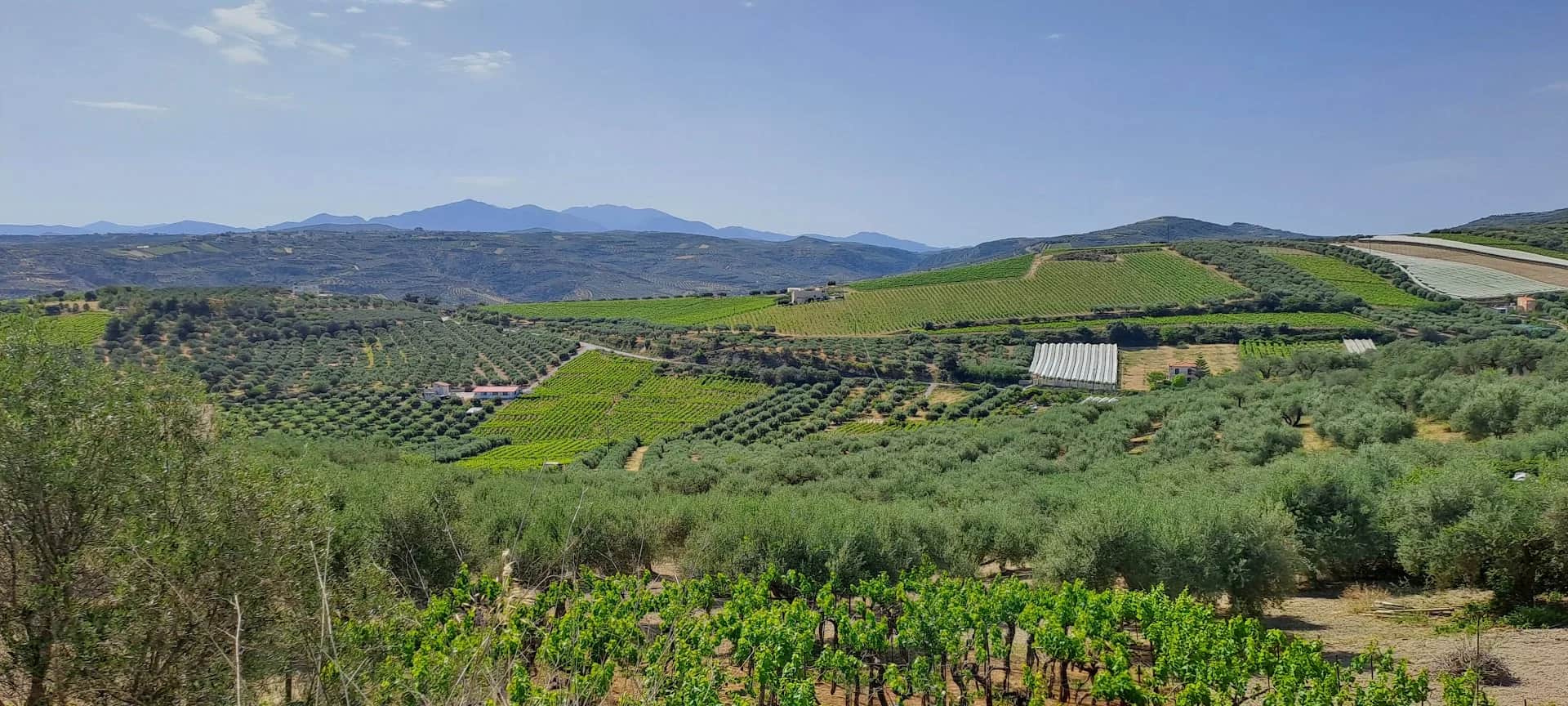
This is one of the strongest routes for travellers who want Crete to feel less coastal and more local. The scenery is not dramatic mountains or famous beaches; it is agricultural Crete, with vineyards, olive trees, dry fields, village roads and family-run production. Heraklion tours are also the easiest to arrange with a private pickup, which turns the day into a smooth experience for villa guests.
Bookable around Heraklion
 Cretan Wine Tasting with Food Pairing at Family Winery near HeraklionHeraklion, Crete · 2 hours€52
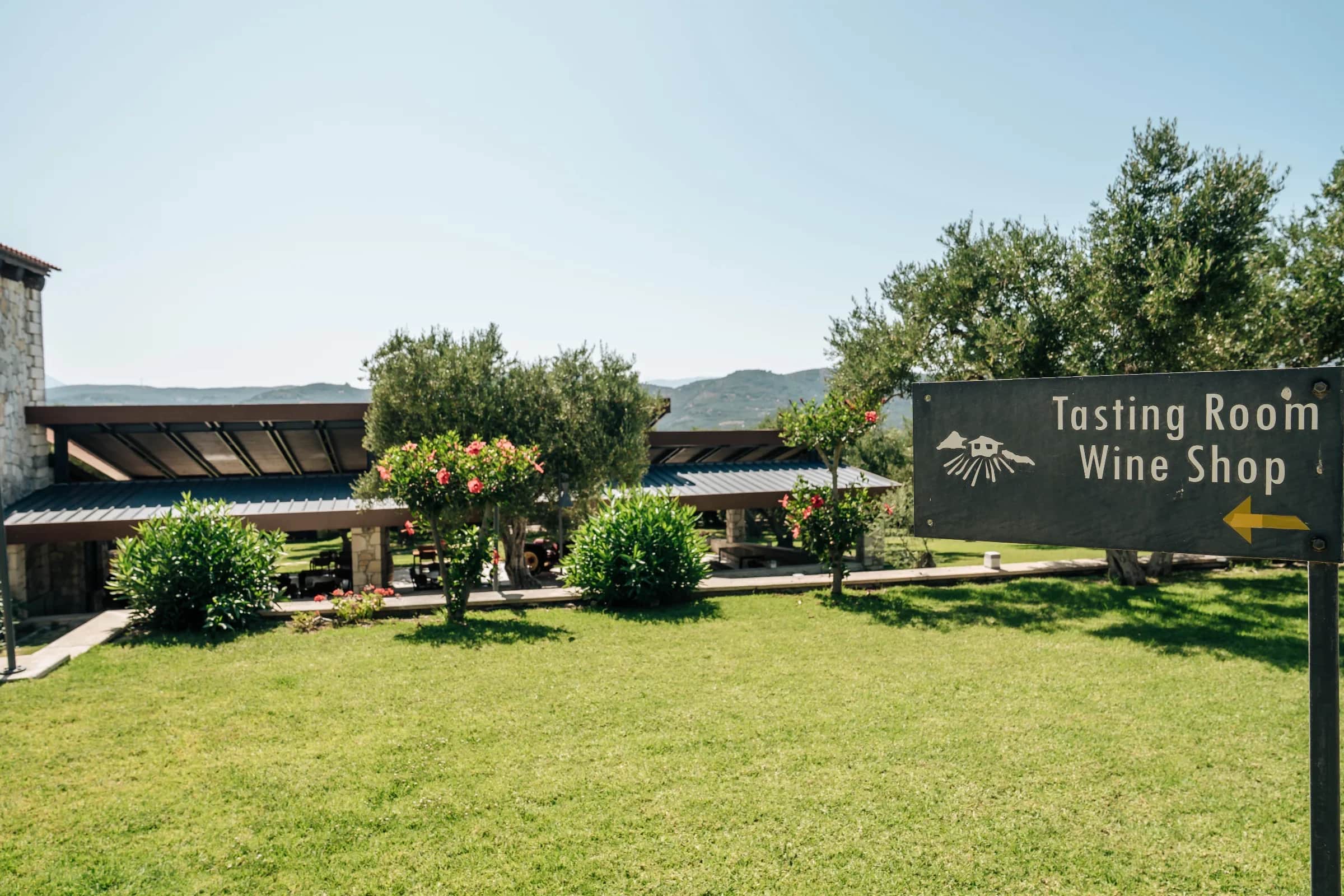
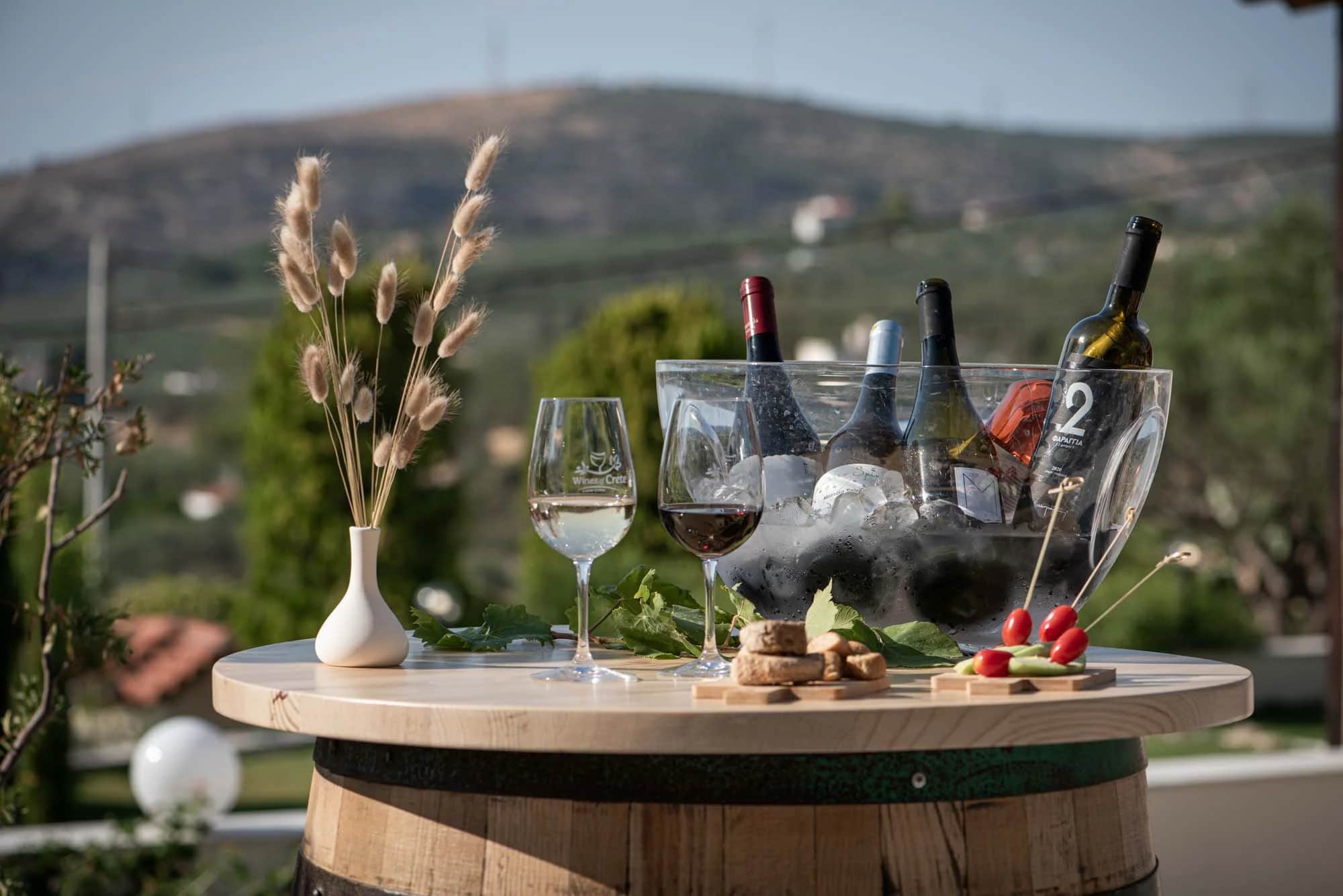 Cretan Wine Soul - Wine Tasting with a view in Heraklion (near Knossos)Heraklion, Crete · 1 hours€25
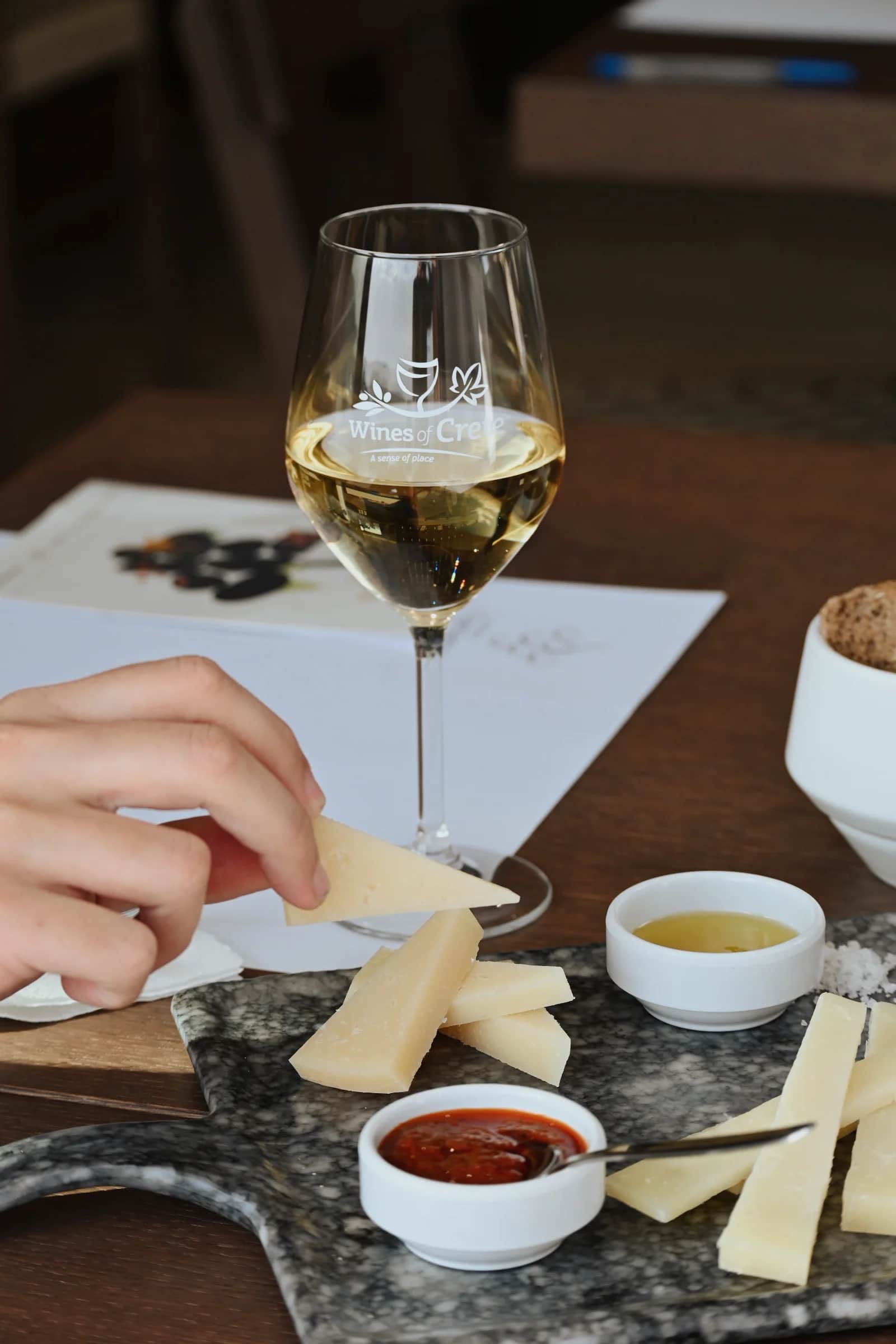 Food and wine pairing course, introducing you to Cretan gastronomy in HeraklionHeraklion, Crete · 2 hours€30
Chania Wine Tours
Chania wine tours make more sense for travellers staying in western Crete.
If your base is Chania town, Agia Marina, Platanias, Kissamos or nearby areas, stay with western routes instead of crossing the island for a Heraklion winery. Crete is larger than many visitors expect, and long transfers can ruin the feel of a relaxed wine day.
Wine tours from Chania often pair well with olive oil tasting, local cheese, honey, village food and scenic countryside, including estates around Kolymvari — the small premium tasting in Kolymvari is a good sample of the western style. The rhythm feels slower, especially when the route includes a taverna lunch or a countryside stop.
One thing to know before you plan a western day: the estates do not sit on a single route. They fall into two clusters facing opposite ways from the city, one running inland towards Kissamos and one to the south and east, so a route that mixes the two loses an afternoon to driving. We map both, with distances and the local Romeiko grape, in our guide to the wineries near Chania.
The main rule is simple. Choose Chania wine tours if you are staying in the west. Choose Heraklion wine tours if you are staying in central or eastern Crete. And for a western day where the food matters as much as the wine, one Chania experience turns the tasting into a full evening.
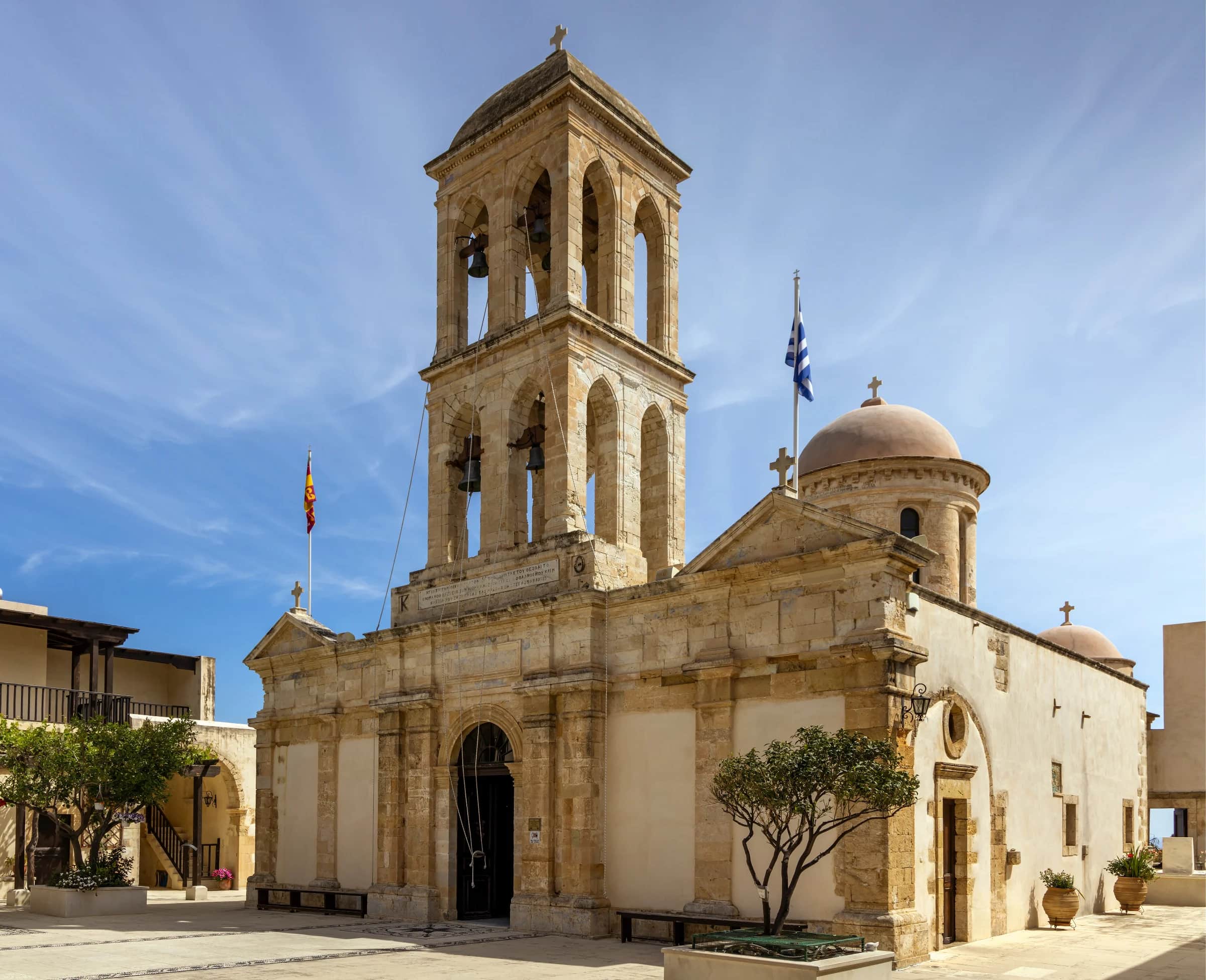
Guided Tour or Self-Drive Winery Visit?
This is one of the most important decisions.
A self-drive winery visit gives freedom. You can choose your winery, arrive at your own pace and combine the visit with another stop. It may also be cheaper. The problem is obvious: someone has to drive. If the point of the day is wine tasting, this can limit the experience.
A guided wine tour is better if the whole group wants to taste. Transport removes the stress, and a good host can connect the winery with the wider area. You also avoid common planning mistakes, such as choosing a winery too far from your accommodation or arriving without understanding the tasting format.
For most visitors, guided transport is worth the extra cost. Wine tasting is more enjoyable when nobody is calculating the drive back.
Private vs Small-Group Wine Tours
A small-group wine tour is usually the best option for travellers who want good value, social energy and an easy plan. You share the day with other guests, follow a set route and still get a guided experience.
A private wine tour is better when comfort and timing matter more. It works well for couples, families, older travellers, groups of friends and villa guests. You can often start closer to your accommodation, avoid unnecessary stops and move at a pace that suits your group. It also makes sense if you want the wine day to fit a wider holiday plan: a slow morning, late-morning pickup, a winery visit, lunch in a village and an early return.
Small-group tours are easier on budget. Private tours are easier on logistics. Neither is better for everyone.

Food on Tour: Snacks, Pairing or a Full Lunch
Wine in Crete makes more sense with food, and on a tour the food format shapes the whole day.
When choosing, look carefully at the description. "Snacks", "light bites", "pairing" and "lunch" do not mean the same thing. A tasting plate keeps the focus on the winery and the day short. A full lunch turns the route into a proper countryside day, usually with a higher price and a later return.
For the fullest food-led route we list, the Rethymno day pairs wine with the island's other pillar, olive oil, around a proper lunch.
Best Time for a Wine Tour
Wine tours in Crete can work through much of the year, but the experience changes by season.
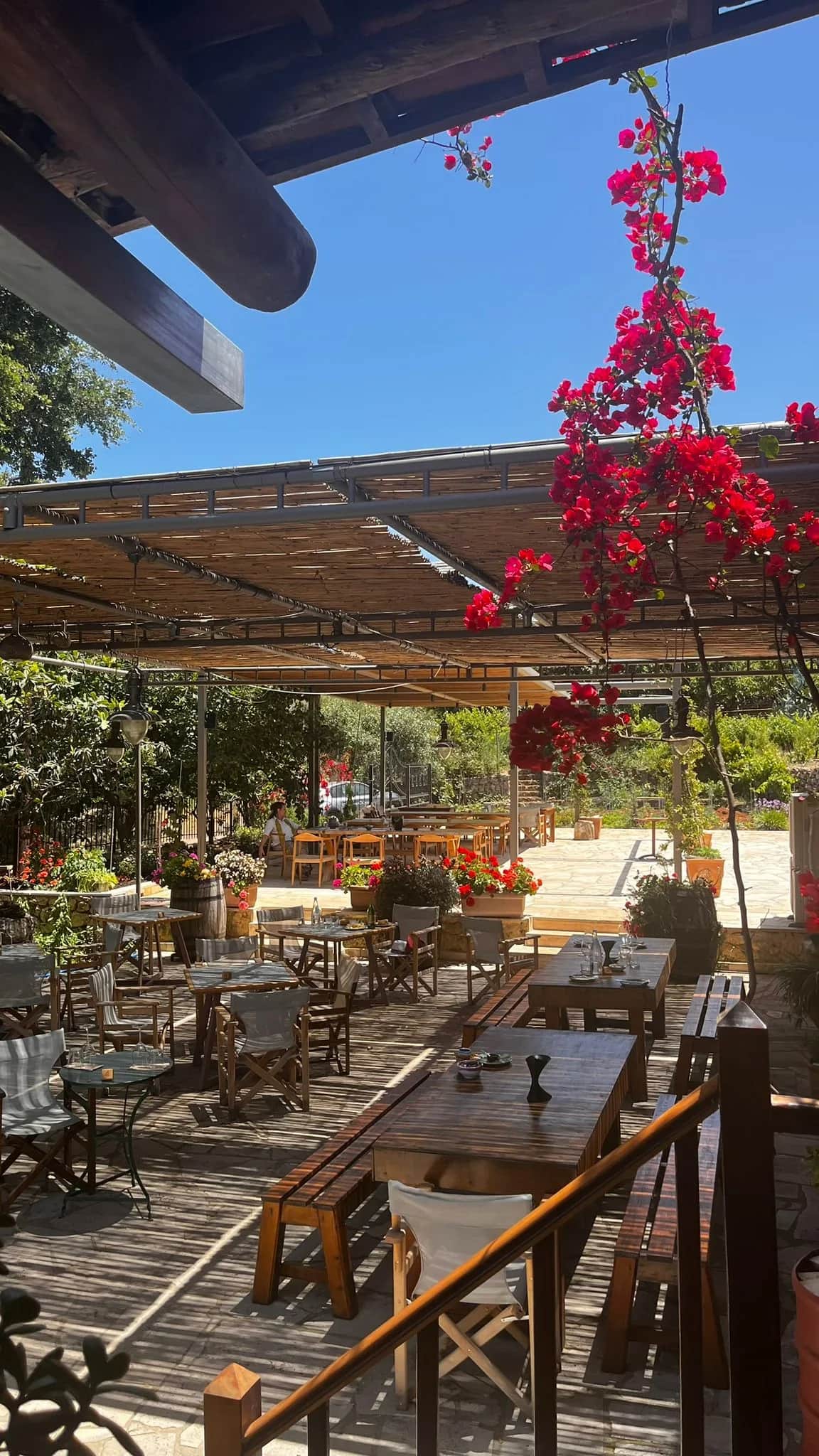
April to June is one of the best periods. The countryside is greener, the weather is comfortable and the days are long enough for relaxed touring. September and October are also excellent: the summer heat is softer and harvest season gives wineries a more interesting atmosphere.
July and August can still work, but heat changes the rhythm. Morning tours or late afternoon tastings are usually better than midday routes, especially if the experience includes vineyard walking. Bring a hat, water and comfortable shoes. Winter can be interesting for repeat visitors or longer stays, but winery hours may be reduced and availability should be checked in advance.
Common Mistakes to Avoid
The first mistake is choosing a wine tour too far from your accommodation. Crete is not a small island. A route that looks manageable on a map can feel tiring in summer traffic or heat.
The second mistake is focusing only on the number of wineries. More stops do not always mean a better day. One strong winery visit with a good host and proper food can be more enjoyable than three rushed tastings.
The third mistake is ignoring transport. If everyone wants to taste, a rental car creates a problem. Guided pickup often adds real value.
The fourth mistake is choosing a tour without checking the food. A wine-only tasting and a wine lunch are different experiences.
The fifth mistake is not looking for native grapes. Cretan wine is most interesting when the tasting includes local varieties.
The sixth mistake is overloading the day. Wine tours need time. A winery, a village stop and lunch can be enough. If you add too many attractions, the day starts to feel like a checklist.
Where to Stay for a Wine-Focused Crete Trip
Where you stay can shape the whole wine experience.
Choose Heraklion if you want practical access to central wine routes, Knossos, Archanes, inland villages and the north coast. Choose Chania if your trip is focused on western Crete and you want wine tours that combine naturally with old town walks, olive oil and village food.
Choose a private villa if you want comfort, space and flexibility. A villa makes the wine day feel easier: you can start slowly, be picked up from your base where possible, return after lunch or tasting and rest by the pool instead of planning another transfer. If you want the grape behind most of those tastings, our guides to Liatiko and Vidiano explain what you will be poured and why it tastes the way it does.
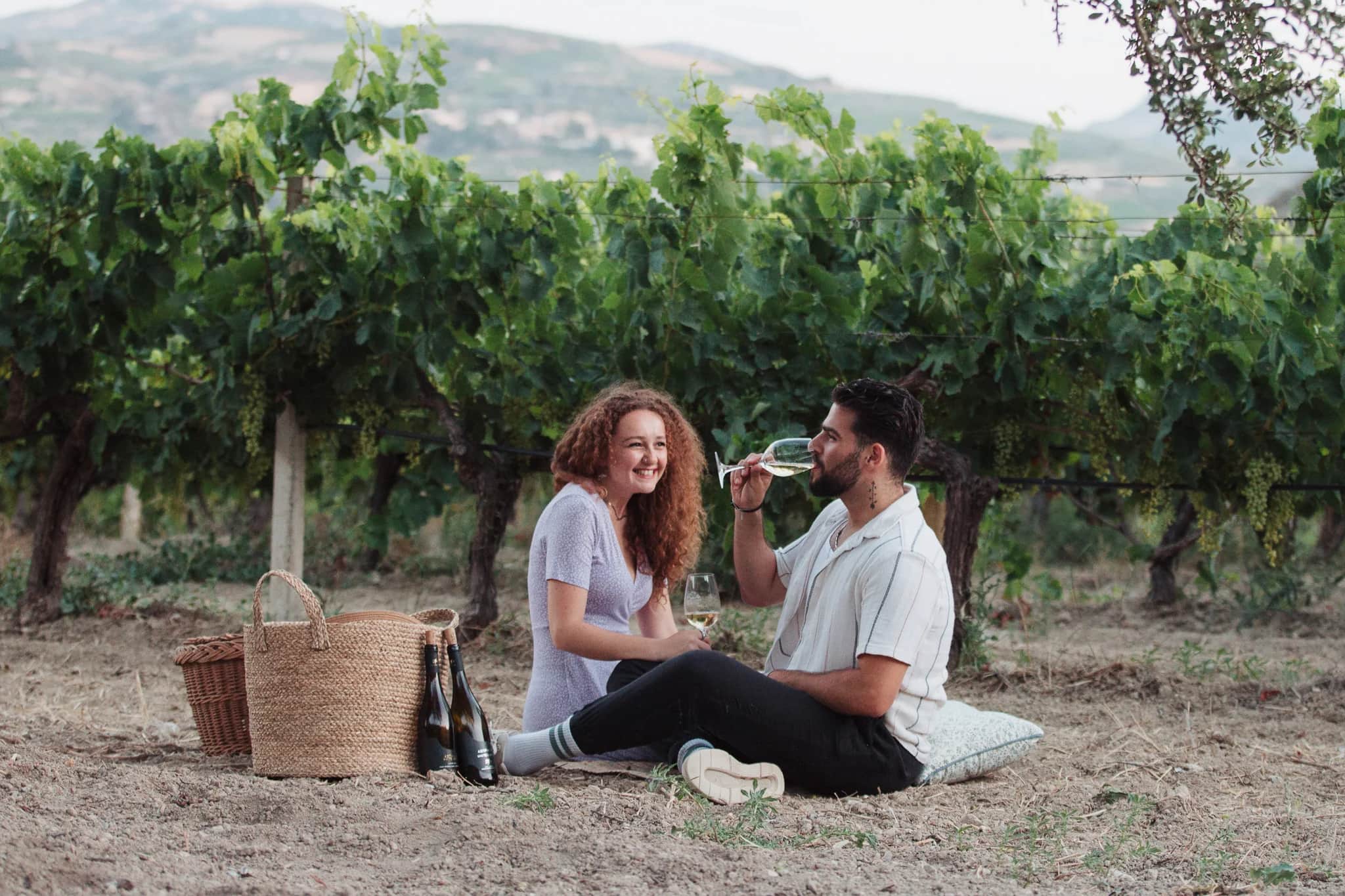
This is where our own villa company My Creta Villa fits naturally into the trip — a private base for wine tasting, cooking classes and relaxed days between experiences. Their own journey through the vineyards and wineries of Crete is worth reading before you pick a route, and a slow villa morning pairs especially well with a private picnic in the vineyards at Dafnes.
Where to stay: private villas in Crete
My Creta Villa — our own villa company
What to Pair a Wine Tour With
Wine tours are inland experiences, so they pair best with activities that match the same slower rhythm.
An olive oil tasting is the most natural pairing, since grapes and olives belong to the same agricultural landscape. A cooking class is another strong match: if wine tasting helps you understand the glass, cooking helps you understand the table. A sailing trip should usually be planned separately — wine and sea days both deserve their own space. A good Crete itinerary might include one day on the water, one day inland for wine and food, and one slower day at the villa or beach.
For a more cultural pairing, one western Crete experience adds a Minoan-style feast to the wine itself.
How to Choose the Best Wine Tour in Crete
Start with your location. This is the most practical filter. If you are staying in Heraklion or nearby resort areas, choose a central Crete wine route. If you are staying in Chania, choose a western route. If you are staying in a villa, use the exact villa location as the starting point.
Then decide your style:
- A simple winery tasting if you want a short, focused visit.
- A small-group guided tour if you want transport, explanation and better value.
- A private wine tour if you want flexibility, comfort and a route built around your group.
- A wine and food tour if lunch is an important part of the experience.
- A mixed countryside tour if you want wine, olive oil, villages and local food in one day.
After that, check the details: pickup zones, group size, number of wines, food inclusions, native grape varieties and total duration. The best wine tour in Crete is not always the longest one. It is the one that fits your base, your pace and your level of interest — you can browse everything we list, grouped by area, to shortlist by where you are staying.
Final Thoughts
The best wine tours in Crete are the ones that connect the glass with the island around it. A good tour should not feel like a rushed tasting room visit. It should take you inland, introduce you to Cretan grapes, give you enough context to understand what you are drinking and leave space for food, conversation and countryside.
Choose Heraklion for practical central routes. Choose Chania if you are staying in western Crete. Choose guided transport if everyone wants to taste. Choose a private tour if you want the day to fit your own rhythm. And if the logistics are not the point for you at all, start with the tasting rooms themselves instead.
Frequently asked questions
How much does a wine tour in Crete cost?
As a planning range, wine experiences in Crete run from around 15 euros per person for a simple tasting to about 160 euros per person for a richer wine and food day. Mid-range tastings with food pairing usually sit around 50 to 75 euros. Prices change by season, group size and availability, so always check the current booking price.
Where is the best base for wine tours in Crete?
Heraklion is the most practical base, with central wine country around Dafnes, Archanes, Peza and near Knossos within an easy drive. Chania suits travellers in western Crete, with estates around Kolymvari, and there is also a Rethymno wine-and-olive-oil lunch route. Choose the area closest to where you are staying.
Is transport or hotel pickup included on Crete wine tours?
It depends on the experience. Some tours include hotel or villa pickup, while others start from a central meeting point or directly at the winery. If everyone in your group wants to taste, a guided tour with transport is more relaxed than self-driving. Always check the pickup zones before you book.
Is a guided wine tour better than driving yourself?
If everyone wants to taste, yes: guided transport removes the designated-driver problem and a good host adds context. Self-driving works for a single winery visit where one person is happy to stay behind the wheel, and it can be cheaper.
Do I need to book a wine tour in advance?
Yes, booking ahead is recommended, especially in spring and early autumn when wineries are busiest and during harvest in September. Smaller estates and private tours have limited daily places, so reserving early gives you the best choice of date and format.