Guides ·
Wineries Near Chania: The Two Clusters and What to Taste
The wineries near Chania do not form a route. That single fact decides more about a western Crete wine day than any list of estate names, and almost nothing written about the region says it out loud. The vineyards sit in two groups facing away from the city in different directions — one running west and inland towards Kissamos, the other tucked into the hills to the south and east — and booking one from each into the same afternoon means driving past your own hotel in the middle of it.
This guide is organised around that geography rather than around a ranking. It covers where the vineyards actually are, how far each cluster sits from the old town, the grape you will only meet in the west, and which of it we can put you inside on a booking. If what you want instead is the decision between a western and a central wine day, our guide to the best wine tours in Crete makes that comparison directly.
Quick Summary
The wineries near Chania sit between roughly fifteen and thirty-five kilometres from the old town, in two clusters. The larger one runs west and inland — Vatolakkos, Pontikiana and the Kolymvari hills, then on towards Drapanias and Kissamos. The smaller one lies south and east, around Keramia and out into Apokoronas. Pick a direction before you pick an estate, because the two do not combine. Chania has no PDO of its own, so its wines carry PGI Chania, PGI Kissamos or the island-wide PGI Crete, and the grape that marks the region out is Romeiko. Hosted tastings we list start at €20, food-led formats at €50, and a full day with a meal runs €120 to €160. The season is roughly April to October, and every serious estate expects you to book ahead.
Why Chania Has No Wine Appellation of Its Own
Greece reserves the PDO, the protected designation of origin, for its most tightly defined wine zones — the ones with fixed boundaries and fixed grapes. Crete has several, and not one of them is in Chania. Peza, Archanes and Dafnes sit in the Heraklion regional unit and Sitia sits in Lasithi. The western third of the island has none at all.
What western producers use instead is the PGI, the protected geographical indication, which draws a bigger circle and writes fewer rules. Three of them apply here: PGI Chania across the whole regional unit, PGI Kissamos over the north-western corner, and PGI Crete, established in 1989, over the entire island. This is not a quality verdict, it is a looser rulebook — and the looseness is exactly why a flight in western Crete can move from a native white to a Rhone-style red in four glasses, while a tasting in the Heraklion villages stays inside the varieties its designations prescribe. Our Heraklion wine tasting guide covers that other, more prescribed half of the island.
The Western Cluster: Vatolakkos to Kissamos
This is where most of the wine is, and it runs inland rather than along the beaches.
It starts closest to the city at Vatolakkos, about fifteen kilometres out on the road that climbs towards Omalos and the White Mountains — around twenty-five minutes from the old town, and the natural first stop for anyone staying in Chania. From there the vineyards follow the hills behind the coast westward: Pontikiana, in the Kolymvari area roughly twenty-seven kilometres out, then the village of Anoskeli in the olive-growing hills above the same coastline, about thirty kilometres from the city and reached by turning inland at Tavronitis. Furthest west is Drapanias, in the municipality of Kissamos, some thirty-five kilometres out and about six kilometres before Kissamos town itself — which sits around thirty-eight kilometres west of Chania.
The practical shape of this cluster is that everything in it lies between about twenty minutes and forty-five minutes from the old town, on the same axis as the western beaches. Two estates from this group combine into one comfortable day, and either one slots into a Kissamos or Falassarna beach day without taking it over. The tasting we list in the Kolymvari country belongs to this side.
The Southern Cluster: Keramia and Apokoronas
The second group is smaller, quieter and points the other way.
Nearest is Katochori, in the Keramia area directly south-east of the city — about twenty kilometres out, at roughly three hundred metres in the northern foothills of the White Mountains. Further east, in Apokoronas, the village of Alikampos sits at the foot of the same range on the road towards Vrysses and Rethymno, roughly thirty to forty minutes from Chania depending on where you start.
What this cluster offers is altitude, emptier roads and a head start if Rethymno is your next base. What it does not offer is choice: there are fewer estates here, and no bookable tasting in our own list departs from this side. If you are staying in Apokoronas and want something we can put you on, the honest answer is that you drive west, or you look at the wine and olive oil tasting with lunch from Rethymno an hour east instead.
Romeiko, the Grape That Stays in the West
Romeiko is the reason a Chania tasting does not taste like a Heraklion one. It is the dominant traditional red of the western Cretan vineyard, and it is the base of marouvas — the oxidative, high-alcohol wine that villages here made long before freshness was a virtue, deliberately exposed to air, aged in barrel and poured from it in tavernas rather than from a bottle.
Modern producers go two ways with it. Some keep the old oxidative style, which is worth tasting once whether or not you order it twice. Others protect it from air and make pale, sharp reds and rosés that catch out anyone expecting something rustic. Asking for both side by side is the most useful sentence a visitor can say in this region. The other western name to know is Moschato Spinas, the Muscat of Spina, an aromatic white associated with the area. Beyond those, Chania estates plant widely — Vilana, Thrapsathiri and Assyrtiko in white, increasingly Vidiano, and Syrah, Grenache Rouge and Cabernet Sauvignon in red.
Kolymvari Is an Olive Oil Name First
This trips up more visitors to western Crete than anything else on the list. Kolymvari is a coastal town west of Chania at the base of the Rodopou peninsula, and its name carries a protected designation — but the designation is for oil. Kolymvari Chanion Kritis has been a registered PDO extra virgin olive oil since 1997, made overwhelmingly from Koroneiki olives, and it is one of the better-known oil names in Greece.
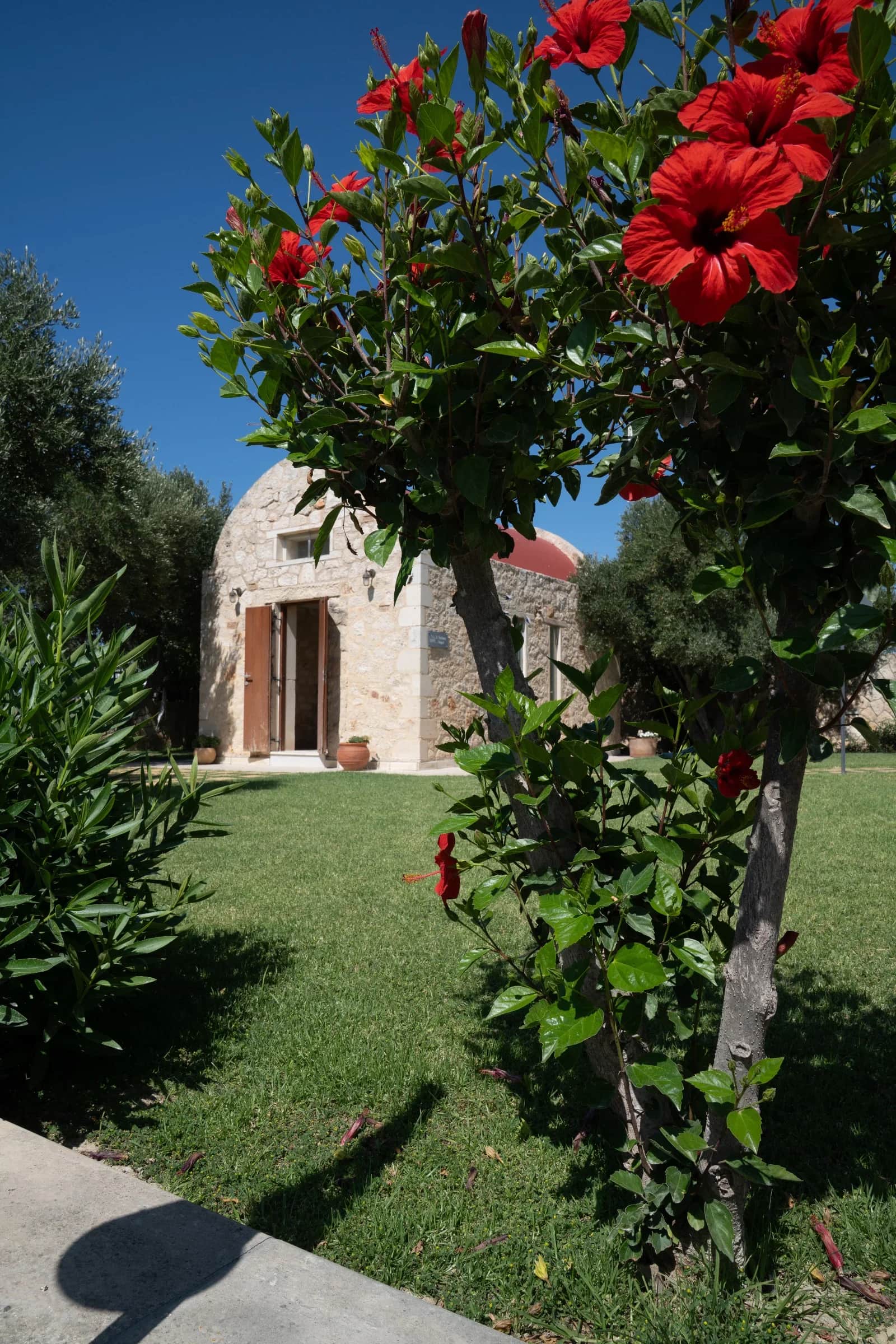
There are real wineries in and around the Kolymvari country, and a tasting sold as a Kolymvari wine tasting is a genuine thing. But the protected reputation of that name belongs to the olive, not the grape. One estate in these hills runs a working olive mill and a winery on the same site, with the mill there first — which is a fair summary of the whole area. Treat that as an opportunity rather than a disappointment: a stop that pours wine and finishes on oil explains western Crete better than either half does alone.
Western tastings you can book
What a Tasting Near Chania Costs
The ladder we list in western Crete has four rungs and no middle-of-the-road guided half day, which is worth knowing before you compare it with the centre of the island.
An hour-long hosted tasting starts at €20 in the Kolymvari country. A premium flight of seven wines is €25. A tasting built around the region's smaller producers is €50 and adds the food that makes the wines make sense. At the top, a full eight-hour day with a meal is €120, and a two-hour tasting with a Minoan-style feast in western Crete is €160.
What is missing from that ladder is the format Heraklion has and Chania does not: a guided half-day vineyard tour with transport, which runs €75 on the central side of the island. In the west, you either book a short tasting and drive to it yourself, or you commit to the full day. There is no comfortable middle, and pretending otherwise is how people end up disappointed. The island-wide tasting guide sets these numbers against what the rest of Crete charges.
Getting to the Wineries
Every estate around Chania needs wheels. There is no walkable wine district and no public transport that serves the vineyards usefully.
Driving yourself works on one condition: somebody genuinely does not taste. Greece sets the general blood alcohol limit at 0.50 grammes per litre, with a stricter 0.20 for novice, professional and motorcycle drivers, and a flight here runs to five, six or seven wines. The hospitality is real and the pours are not small. If the driver plans to taste even lightly, build the day around a long lunch and accept that you are relying on judgement rather than on a margin.
Booking a full day removes the problem along with the two others nobody warns you about — the appointments and the language. Someone who knows the families gets a different visit than a stranger at the gate.
When the Wineries Are Open
The visiting season runs roughly April to October, with some estates continuing into November and most reverting to appointment-only over winter. Hours differ from estate to estate and change from year to year, so confirm with the specific winery rather than trusting a general rule — two of the best-known estates in the area already publish season windows that end six weeks apart.
May, June, September and October are the most comfortable months for walking vineyard rows. July and August push the experience onto shaded terraces and into cellars, which is no hardship, but the middle of the day is not the hour to be standing among vines here. Harvest falls from mid-August to early October, September being the core month. It is the liveliest time to visit and also the busiest: some estates shorten or suspend tours while the cellar is working, so a harvest visit needs confirming rather than assuming.
How to Choose Between the Clusters
Answer one question first: is wine the day, or part of it?
If it is part of it, take the western cluster and pair it with the coast. An hour at a Kolymvari-area estate costs you almost nothing from a beach day, and the road out to Kissamos and Falassarna runs past the same turnings.
If wine is the day, give it the whole day and stay in one direction. Two stops is the right number here — the distances look shorter on a map than they drive, and the third estate is always the one nobody remembers. Book transport if two or more of you want to drink, because that is the point at which the arithmetic stops favouring a rental car.
If you are based east of the city, in Apokoronas or towards Vrysses, accept the geography rather than fighting it. The southern cluster is closer to you than the west, but it is thinner on visitable estates, and Rethymno is nearer than the Kissamos end of Chania.
Common Mistakes to Avoid
Booking one estate in the west and one in Apokoronas on the same day is the error unique to this region. They face opposite ways; the drive between them eats the afternoon.
Arriving without an appointment is the classic one everywhere, and it costs people the exact estate they came for. A message a day or two ahead solves it in any season.
Assuming Kolymvari is a wine designation is the third. It is an olive oil PDO, and treating the two as the same thing leads to a mild disappointment on one side and a missed tasting on the other.
Skipping Romeiko for the international varieties is the fourth. The Syrah here is good and worth drinking — but you can drink Syrah at home, and Romeiko exists in commercial quantity almost nowhere else.
Where to Stay
Chania town is the practical base. It puts every estate in the western cluster inside forty-five minutes, it is where full-day experiences collect from, and it means the evening ends among wine bars rather than on an unlit rural road. For a wine-led trip, the countryside between the city and Kolymvari puts you inside the olive and vine landscape itself, while the Apokoronas villages give a quieter base under the White Mountains and a shorter run towards Rethymno.
One honest note on our own side of this. We run our own villa company, My Creta Villa, and its houses are in central and eastern Crete — around Heraklion and Lasithi — not in Chania. So if you are basing a trip in the west, book your stay locally and use us for the tasting. If you are staying with us in the centre and east, the wine country on your doorstep is the Heraklion one, covered in our Heraklion wine tours guide, and Chania is a separate trip rather than a day out.
Villas we run in central and eastern Crete
My Creta Villa — our own villa company
Wineries near Chania: frequently asked questions
How far are the wineries from Chania town?
Between roughly fifteen and thirty-five kilometres. The nearest of the well-known estates is about fifteen kilometres inland at Vatolakkos, around twenty-five minutes away. The furthest sit near Drapanias and Kissamos, some thirty-five kilometres west, at about forty-five minutes.
Does Chania have its own wine appellation?
Not a PDO. Every protected designation of origin on Crete lies in the Heraklion or Lasithi regional units — Peza, Archanes, Dafnes and Sitia. Chania wines carry a PGI instead: PGI Chania across the regional unit, PGI Kissamos in the north-west, or the island-wide PGI Crete, which dates from 1989.
Which grape is Chania known for?
Romeiko, the dominant traditional red of the western Cretan vineyard and the base of marouvas, the oxidative barrel-aged wine poured in village tavernas. Moschato Spinas, the Muscat of Spina, is the other local name. Ask for Romeiko in both its traditional and modern styles if an estate makes both.
Can you visit wineries near Chania without a car?
Not realistically on your own — the estates are fifteen to thirty-five kilometres out with no useful public transport. A full-day experience with transport included is the practical answer, and it removes the drink-driving problem that self-driving creates. The general Greek blood alcohol limit is 0.50 grammes per litre, and a flight here runs to five, six or seven wines.
Is Kolymvari a wine region?
It has wineries, but Kolymvari is famous as an olive oil name. Kolymvari Chanion Kritis has been a protected designation of origin for extra virgin olive oil, mostly Koroneiki, since 1997. Tastings in the Kolymvari country are genuine, but the protected reputation belongs to the oil.
Final Thoughts
The wineries near Chania reward one decision made early and then left alone. Pick west or south, book one or two estates inside that choice, sort the driving so everybody can drink, and ask for Romeiko when the first glass is poured. Western Crete will not give you the dense, systematic wine country that the villages south of Heraklion do — it has neither the appellations nor the concentration for that. What it gives instead is a grape that barely leaves this corner of the island, olive oil good enough to hold its own on the same table, and vineyards close enough to the beaches that the day never has to be one or the other.
See all wine experiences in Crete