Guides ·
Kotsifali Wine: Crete's Blending Red and How to Ask for It
Kotsifali is the red grape you are most likely to drink on Crete and least likely to see named. Order the local red in a Heraklion taverna, or take the standard flight at a winery in the hills south of the city, and the wine in front of you is probably built on it. The label will say Peza or Archanes, and on most bottles it stops there — the grape that dominates the blend goes unmentioned, and that is the appellation working exactly as designed.
This guide keeps to the grape rather than the village: what Kotsifali tastes like, why it is almost always poured as part of a blend, what the appellation rules do and do not specify, and how to ask for it so that a tasting actually pours it. For the village itself, with its own designation and its tavernas, our Archanes wine tasting guide covers the ground.
Quick Summary
Kotsifali is the classic red grape of the Heraklion hills and the variety behind the reds of PDO Peza and PDO Archanes. On its own it gives a wine that is low in colour, intensely aromatic, relatively high in alcohol and soft in both tannin and acidity — which is precisely why it is rarely bottled alone. Its usual partner is Mandilaria, which supplies the colour, tannin and acidity it lacks. Neither appellation's specification states a percentage, so any page quoting a ratio is guessing. Varietal Kotsifali does exist, but it cannot use the PDO names and appears as PGI instead. Tastings that pour these reds start at €19 near Heraklion.
The Grape Behind the Blend
Kotsifali is grown across Crete, but the wines that matter come from the hill zones immediately south of Heraklion, which is also where the island's red appellations sit. It is the named red variety of both Peza and Archanes, and it turns up in the red of Handakas–Candia, the larger appellation created in 2011 that overlaps them both.
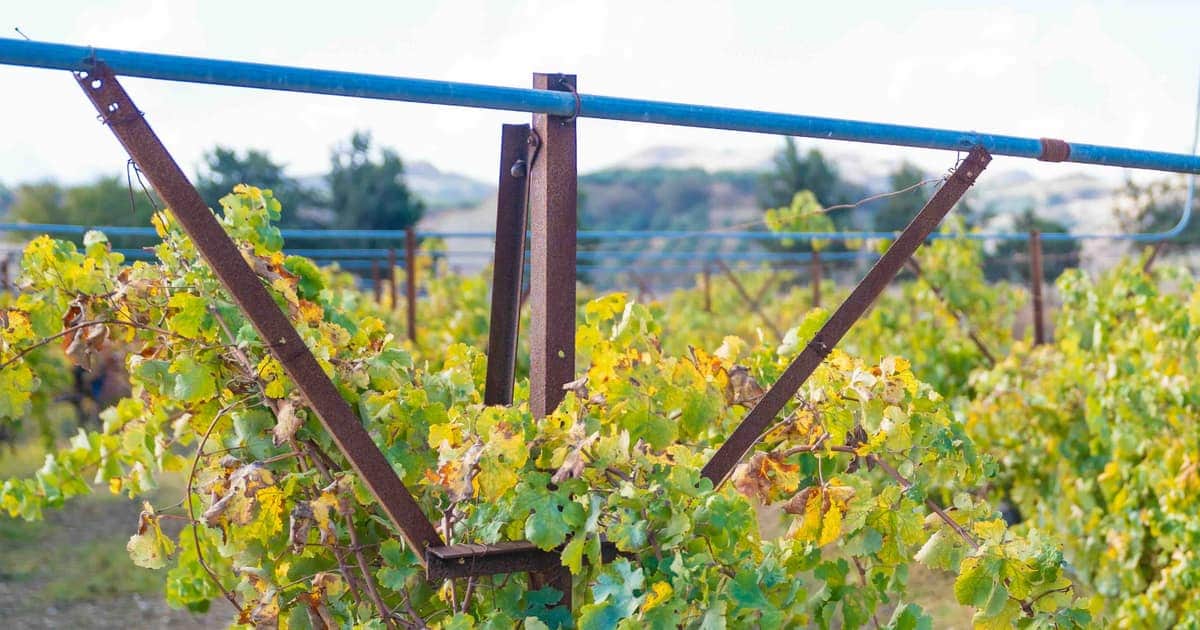
In the vineyard it is vigorous and productive, and its central difficulty is one of timing. Left hanging long enough to build colour and tannin, it keeps accumulating sugar, so the alcohol climbs while the grower is still waiting for structure that never quite arrives. Pick early to control the alcohol and you get even less colour. That single bind explains almost everything about how the grape is used.
It is worth being precise about how important the grape is, because the usual summaries get it wrong in both directions. Across Crete as a whole, Liatiko leads by planted area — a different red, pale and perfumed, which we cover in our Liatiko guide. On the Heraklion prefecture's own vineyard register, though — the regional unit that holds the red appellations — Kotsifali is the largest wine grape of any colour, ahead of Vilana, Liatiko and Mandilaria in that order. It is a regional heavyweight rather than an island-wide one, which is why it dominates the bottles around Heraklion and barely registers elsewhere.
What Kotsifali Tastes Like
The short version, from the Greek wine sector's own description: typically Mediterranean, intense on aromas, relatively high in alcohol, soft in tannins and acidity, and pale. It is a wine that smells considerably more serious than it looks. The Cretan producers' association reaches for the shorthand we would too — Kotsifali is the island's answer to Merlot, fleshy and plummy and soft, which also tells you why Mandilaria ends up playing the Cabernet role beside it.
The appellation paperwork is unexpectedly good on the tasting note. The ministry file for PDO Peza describes the red as bright ruby with orange highlights, a nose of spices and dried fruits, and a palate that is round, balanced and long. Those orange highlights are the giveaway: this is a wine whose colour moves early. Beyond that the aromatics run to red and sour cherry, plum and wild strawberry, with sweet spice and a dried-herb note underneath. Drinkers who judge a red by its colour underestimate it; drinkers who want grip should skip it.
How long the wines keep is genuinely disputed, with Cretan sources putting everyday bottles at two to three years and barrel-aged examples at five to seven. Treat any single number as an estimate.
Why Mandilaria Is Always in the Bottle
The blending is not a stylistic habit or a way of stretching a good grape. It is a fix for a specific technical problem, and the two varieties are close to exact opposites.
Kotsifali brings aroma, body and alcohol, and brings very little tannin or acidity. Mandilaria brings deep, stable colour, firm tannin and good acidity, and brings very little alcohol. Bottled alone, the first is a perfumed wine with no grip; the second is hard and austere. Together they make a medium-bodied red with real colour, soft but present tannin and enough freshness to sit through a long meal, and the two are co-fermented rather than blended after the fact — the appellations require it in so many words. Crete arrived at the pairing centuries before anyone wrote it down.
The colour half of that is worth sharpening, because "Kotsifali is low in colour" understates the problem. Greek viticultural work names the defect more precisely as colour instability — not only how much colour the wine starts with, but how badly it holds it, with red Peza and Archanes noted for colour-durability problems as they age. That is what the orange rim in the appellation's own tasting note is. Mandilaria is not topping up a deficit so much as supplying colour that stays put.
You can see how well understood this is from how the law is written. The PDO Handakas–Candia specification sets a minimum natural alcohol of 12.7% for must from Kotsifali and 10.5% for must from Mandilaria — the same wine, a 2.2-point gap, legislated grape by grape. Appellations rarely admit in writing that two permitted varieties turn up in different condition, let alone put a number on it.
Mandilaria is not a Cretan exclusive, incidentally. On Rhodes the same grape is called Amorgiano and carries that island's red designation on its own — the clearest possible demonstration that it is the structural half of the partnership.
The Appellations That Print the Place, Not the Grape
Here is why the name disappears. PDO Peza covers both colours: a white from Vilana alone, and a red made from Kotsifali and Mandilaria. PDO Archanes is red only, from the same two varieties. In both cases the label carries the place name, because that is what the designation is for — and the grape that dominates the blend goes unmentioned on the front of the bottle.
The more useful detail is what the specifications leave out. Neither states a percentage. That is not an oversight in our reading of them; it is the reason secondary sources quote three different ratios for the same wine, and we have seen 75/25 and "25 to 30 per cent Mandilaria" printed for PDO Peza within the same afternoon of research. The Archanes specification goes as far as attributing the firmer local style to the village's aromatic Kotsifali together with what it carefully calls a possibly increased proportion of Mandilaria. When an appellation's own paperwork hedges the balance, no guide should sound more certain than the document does.
One point of orientation, since these zones get confused: Peza and Archanes are the Kotsifali appellations south of Heraklion, while Dafnes to the south-west is Liatiko country, and its dry red is at least eighty per cent Liatiko rather than a Kotsifali blend. Our wine tasting in Heraklion guide walks the three villages one by one.
Varietal Kotsifali and the PGI Label
Because both PDOs require the co-fermented blend, a wine made from Kotsifali alone cannot use either name, however good it is and however local the fruit. It has to be sold under a broader designation, so the varietal bottlings you find are labelled PGI Heraklion or PGI Crete.
There is an EU labelling rule underneath this that explains why producers so rarely name the grapes even when they could: name two or more varieties and they must be listed in descending order of proportion, in identical type. Printing "Kotsifali – Mandilaria" therefore declares a hierarchy. Printing the place keeps the blend a cellar decision.
They are genuinely worth seeking out. Producers make them both unoaked and with several months in French oak, and the unoaked style — chilled slightly — behaves like a light summer red that will sit happily next to fish, which is not what most people expect from a red on a Greek island.
The label logic here is the opposite of most visitors' instinct, and it is the single most useful thing on this page. A PDO on a Cretan red tells you the wine follows a blend rule for a defined zone. A PGI tells you the producer chose not to be bound by it. On this island that is frequently the more interesting bottle, and it is the same reason almost every varietal Vidiano is a PGI wine, as our guide to Cretan white wine grapes explains on the white side.
Tastings that pour the reds
Kotsifali Outside the Native Blend
Mandilaria is not the only way to solve Kotsifali's structural problem, and a generation of producers has been solving it with international varieties instead. Syrah and Cabernet Sauvignon both do the same job — colour, tannin, a firmer frame — with a different accent, and Kotsifali blended with either can be excellent.
Those wines cannot be PDO, and the reason is absolute: no Cretan PDO permits an international variety at all, so every one of them is a PGI bottle.
There is a working example in the village of Archanes itself: the small Sinadinakis winery, bottling under the Eltyna label, makes a red built on Kotsifali with Cabernet Sauvignon. By definition that wine sits outside the Archanes designation, which permits only Kotsifali and Mandilaria — a neat illustration that stepping out of the appellation is a deliberate winemaking choice rather than a shortfall. You will also meet Kotsifali blended fifty-fifty with Liatiko under PGI Crete, which keeps the whole wine native while going for perfume rather than power.
Asking for It at a Tasting
Cretan flights lead with whites, for sound commercial reasons — Vidiano has the reputation and it sells. So the most useful thing you can do is say what you want before the first glass is poured.
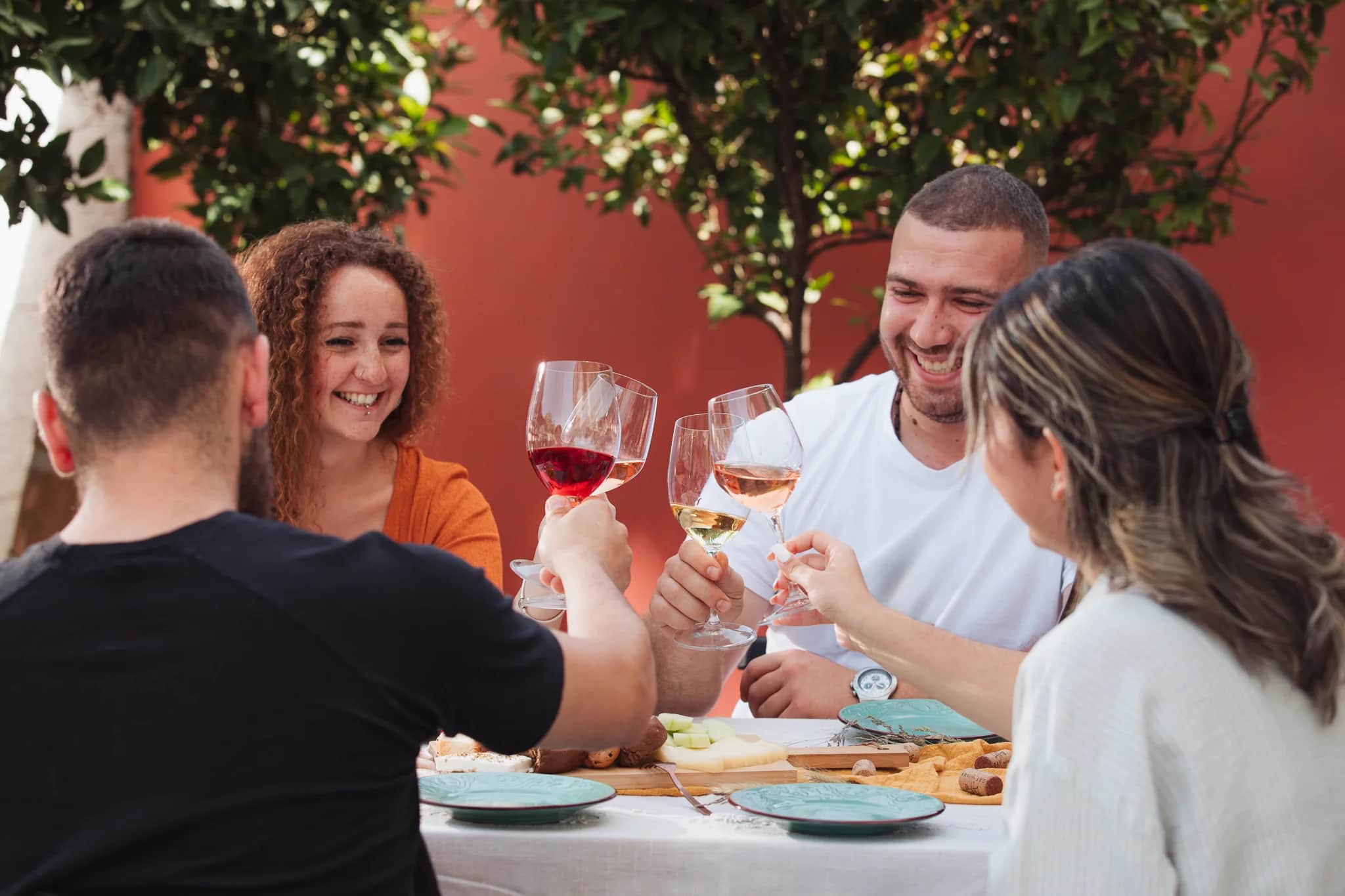
Three requests get results. Ask for the reds side by side rather than one at a time, because the whole point of this grape is comparative. Ask whether the estate makes a varietal Kotsifali, and if it does, taste it next to the PDO blend — two glasses teach more about why Cretan reds are blended than any amount of reading. And ask which reds are not on the printed flight, since the more serious bottles are often poured only on request. A five-wine flight will normally include the house red blend; seven is where a varietal or a reserve red starts to appear.
Food and Serving Temperature
These are food wines, and they were shaped by the table they grew up next to. The Kotsifali and Mandilaria blends suit rich meat cooking: slow-cooked lamb, casseroles and stews, sausage, roasted meats, and hard aged cheese such as graviera. The savoury, herbal streak in the wine matches the oregano and thyme that run through Cretan cooking, and the soft tannin handles tomato and olive oil far better than a firmer red would.
On temperature the honest advice is narrower than the one usually given for soft Mediterranean reds. Cretan producers are strikingly consistent about the PDO blends and land on 16 to 18°C — cellar-cool, not cold. These wines are low in acid and generous in alcohol, and over-chilling flattens the aromatics that are the entire reason to drink the grape. The exception is the lighter unoaked styles, including an unoaked varietal Kotsifali, which are built to be served properly cool and are much better for it on a hot evening.
Common Mistakes to Avoid
Judging the wine by its colour is the first and most common. Kotsifali is pale by nature, and reading pale as thin means missing the aromatics entirely.
Assuming a PDO outranks a PGI is the second, and on this island it is close to backwards. Expecting the grape name on the front label is the third — most Peza and Archanes bottles lead with the place or the family name, so the variety is something to check for rather than count on.
Over-correcting on temperature is the fourth: these reds are too alcoholic for the straight-from-the-fridge treatment that soft, low-tannin wines usually get recommended. The fifth is trusting a printed blend ratio, because the numbers in circulation are not even consistent with one another.
Where to Stay
Staying in or just south of Heraklion puts you inside the zone where this grape is grown and bottled. Peza and Archanes are a short drive into the hills, and the airport is close enough that a tasting works on an arrival or departure day. For anyone wanting the eastern reds around Sitia, a base in Lasithi shortens what is otherwise a long drive.
We run our own villa company, My Creta Villa, so we can be straightforward about what it covers: most of its villas are around Heraklion and in Lasithi, which is exactly the ground these red appellations sit on. It also manages villas in Chania and Rethymno, though neither of those regional units has a wine PDO.
Villas near the Heraklion vineyards
My Creta Villa — our own villa company
Kotsifali wine: frequently asked questions
What does Kotsifali taste like?
Red and dark cherry, plum and wild strawberry, with sweet spice, dried flowers and a dried-herb edge. The texture is round and soft with low tannin and low acidity, and the colour is pale to medium ruby — considerably lighter than the aroma leads you to expect.
Why is Kotsifali blended with Mandilaria?
Because each fixes the other's weakness. Kotsifali is aromatic, full-bodied and high in alcohol but low in colour, tannin and acidity. Mandilaria is deeply coloured, tannic and acidic but low in alcohol. Blended, they make a balanced medium-bodied red that neither grape produces alone.
Can you buy wine made only from Kotsifali?
Yes, though it is the exception. A varietal Kotsifali cannot be sold as PDO Peza or PDO Archanes, because both appellations require the blend, so it appears under PGI Heraklion or PGI Crete instead. Producers make it both unoaked and with several months in French oak.
What percentage of PDO Peza is Kotsifali?
The specification does not say. It names Kotsifali and Mandilaria without setting proportions, which is why different sources quote different ratios for the same appellation. Treat any specific percentage you read as an estimate rather than a rule.
Should Kotsifali be served chilled?
Not the PDO blends. Cretan producers consistently recommend 16 to 18°C for the Peza and Archanes reds — cellar-cool rather than cold — because the alcohol is high enough that chilling flattens the aromatics. The lighter unoaked styles, including an unoaked varietal Kotsifali, are the exception and are much better served properly cool.
Is Kotsifali the most planted grape in Crete?
No. It is the classic red of the Heraklion appellations, but Greek planting data ranks Liatiko first by area across the island. Kotsifali's significance is that the central red appellations are built on it, not that it covers the most ground.
Final Thoughts
Kotsifali is a grape you meet by drinking rather than by reading, which is why so little is written about it and why what is written so often includes a blend ratio nobody ever specified. Learn the one mechanism — soft, pale, aromatic grape plus dark, tannic partner — and the reds of Peza and Archanes stop being anonymous place names. Then ask for the varietal alongside the blend, and serve both cooler than you think. For where these tastings sit among the rest of the island's options, our best wine tasting in Crete guide covers the lot.
See all wine experiences in Crete