Guides ·
Cretan White Wine Grapes: Vilana, Vidiano and the Rare Ones
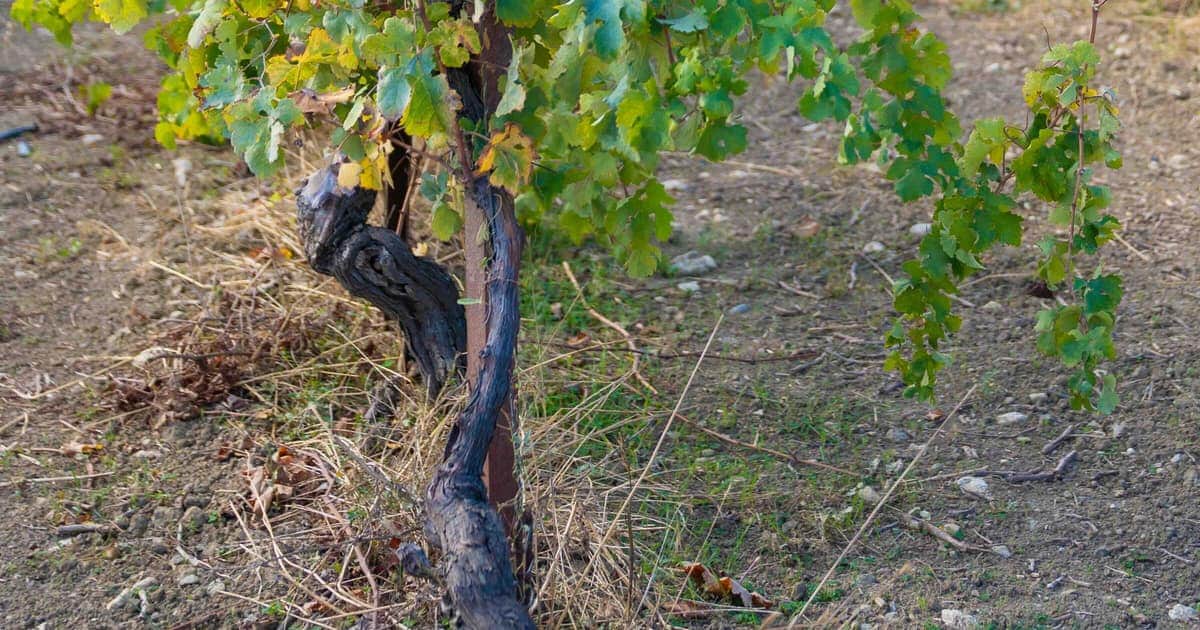
Crete pours more white wine than red, and almost none of it is made from a grape you will recognise. Ask for a white in a Heraklion taverna and you will most likely be handed Vilana; ask a producer what they are proudest of and you will get Vidiano. Behind those two sit four or five varieties so rare that a cellar may have one bottle or none — and those are usually the ones worth ordering on sight.
This is the white half of Crete's native vineyard, grape by grape: what each one tastes like, where it grows, which appellation lets it into the bottle, and how to make sure a tasting actually pours it. The reds are a different argument, and we make it twice: in our Liatiko guide for the pale red that stands alone, and in our Kotsifali guide for the one that carries the Peza and Archanes blends without ever appearing on the label.
Quick Summary
Crete's white wine grapes are led by Vilana, the everyday white of the Heraklion appellations, and Vidiano, the textural one producers pour first for visitors. Thrapsathiri is the fuller, softer white of the east. Behind them come the rarities: laurel-scented Dafni, sharp Plyto, perfumed Muscat of Spina, and Malvasia di Candia Aromatica, which is capped at fifteen per cent even in the two appellations that carry the Malvasia name. Romeiko in the west is a pale red often vinified white. Tastings that pour several of them start at €15 in Heraklion.
Vilana: The White You Will Be Poured
Vilana is the reference white of central Crete and the one behind most house whites on the north coast. It is grown mainly in Heraklion and Lasithi, and it makes light-bodied, fresh dry wines with lemon and pear, white flowers like jasmine, and a herbal edge underneath. Most of it is built to drink young, within about three years of harvest, though barrel-aged versions exist.
It also carries the appellations. The white of PDO Peza is made from Vilana alone; the white of PDO Sitia is seventy per cent Vilana with thirty per cent Thrapsathiri; and the white of PDO Handakas–Candia, created in 2011, is a minimum of eighty-five per cent Vilana with Assyrtiko, Athiri, Thrapsathiri and Vidiano allowed in the remaining fifteen.
One correction, because nearly every English-language page repeats it: Vilana is not Crete's most planted variety. Greek planting data ranks Liatiko first by area, with Vilana well down the list. What Vilana genuinely is, is the leading white of the Heraklion appellations — a real distinction that has been flattened into a false superlative.
Vidiano: The One Producers Pour First
Vidiano comes from the Rethymno regional unit, where it survived as scattered vines inside mixed old vineyards until growers propagated material from very old self-rooted plants and put it into dedicated blocks. In the glass it is defined by texture rather than volume: apricot and peach, citrus and herbs around them, a creamy body and enough acidity to keep it upright. It is made both unoaked and barrel-aged, and a 2023 study of Cretan varieties found it genetically very close to Vilana.
That is the short version on purpose — we give the grape a full guide of its own in Vidiano wine, including the styles and how to choose a bottle. The one thing worth adding here is a labelling quirk: no Cretan PDO permits a varietal Vidiano, so almost every single-variety bottle you pick up says PGI Crete. On this island a PGI label is not a step down — it is frequently where the most ambitious whites live.
Thrapsathiri: The Fuller White of the East
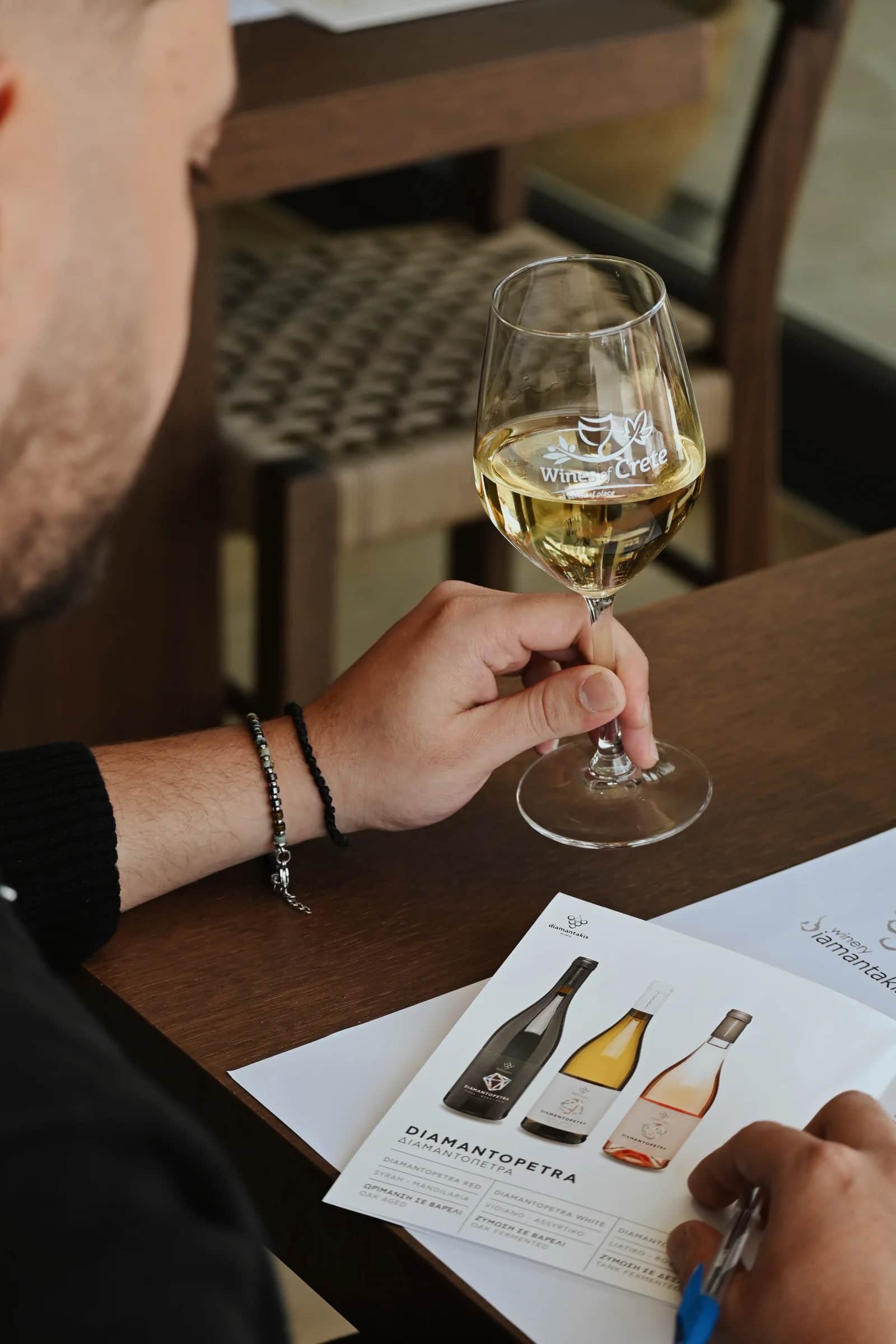
Thrapsathiri grows across the island with its heartland in the east, around Sitia in Lasithi and in Heraklion. It gives fuller-bodied whites with soft acidity and stone-fruit and melon character — peach, melon, pear, citrus — rather than sharp freshness. If Vilana is the one you drink without thinking and Vidiano the one you think about, Thrapsathiri is the one that suits richer food: baked fish, anything with olive oil doing the work, cheese that is more than mild.
Despite the name, it is not related to the Aegean variety Athiri — DNA analysis separated them. It is also the junior partner in the white of PDO Sitia, which is the easiest place to meet it on a label rather than in a blend.
Dafni, Plyto and Muscat of Spina: The Ones to Order on Sight
These are the ones to order the moment you see them, because you may not see them again.
Dafni takes its name from the Greek word for bay laurel, and the wine earns it: laurel is the first thing most people find, with Cretan herbs like rosemary and thyme, citrus and quince behind it. It is grown mainly around Heraklion and bottled under PGI. Plyto is the opposite temperament — taut, markedly fresh, high in acidity, with lemon, lime, green apple and pear. It is the Cretan white that tastes least like it came from a warm island, and only a handful of wines are made from it.
Both survived because growers in the Heraklion area went looking for old vines, identified them and replanted. The producer most closely associated with that work is Lyrarakis of Alagni, south of Heraklion, which planted both in its Psarades vineyard in the early 1990s and later revived a third near-lost variety, Melissaki. It is worth knowing whose idea this was, because without it two of these six grapes would be a footnote.
The third to grab is Muscat of Spina — Moschato Spinas — the Cretan member of the Muscat Blanc à Petits Grains family, named after Spina, a mountain village in the Selino area of Chania. It is thin-skinned and among the most aromatic varieties on the island, made both dry and sweet, with jasmine, orange blossom, lime and chamomile.
If you like aromatic whites and have had nothing but Vilana all week, this is the bottle to ask for by name. It is also one of the two varieties allowed into the top fifteen per cent of Crete's sweet Malvasia appellations, which is the only place most visitors ever encounter it.
Malvasia, and How Many Native Grapes Crete Really Has
Malvasia is the one that catches people out, and the confusion is built into the label.
Under Venetian rule Crete exported a sweet sun-dried wine sold across Europe as Malvasia, shipped out of Candia — the Venetian name for Heraklion. The trade ended with the Ottoman conquest in 1669 and the name went with it. Crete's two modern Malvasia appellations, Malvasia Sitias and Malvasia Handakas–Candia, were created in December 2011 as a deliberate revival, and neither is a varietal Malvasia: both require at least eighty-five per cent of other varieties — Assyrtiko, Athiri, Thrapsathiri and white-vinified Liatiko, with Vidiano also allowed in Handakas–Candia — leaving Malvasia di Candia Aromatica and white Muscat to share the last fifteen.
The grape itself is not really Cretan either. Despite the Candia in its name, its centre of gravity is Italian, with far larger plantings in Lazio and Emilia-Romagna than anything on this island. So a Cretan Malvasia records a style and a history, not the grape in the glass — worth knowing before paying a premium for one.
Which leads to the other number worth distrusting. You will read everywhere that Crete has eleven indigenous varieties; that figure comes from the Cretan producers' association, whose varieties page features eleven grapes, and the association never presents it as a total. Peer-reviewed ampelography puts at least thirty-six cultivars of Cretan origin among roughly four hundred recorded across Greece. Treat eleven as the list you will meet on wine lists, not as the size of the island's vineyard — and treat "grows only on Crete" the same way, since Malvasia di Candia is overwhelmingly Italian and Mandilaria, on the red side, is solely responsible for the red of PDO Rhodes, where it is called Amorgiano.
Tastings that pour the Cretan whites
Romeiko: The Western Exception
Romeiko belongs to western Crete and above all to Kissamos, and it does not sit neatly in a list of white grapes. Its berries are pigmented and variegated and it is usually classed as a red variety, but the colour is pale and unstable, which is why the same grape is turned into red, rosé and white wines, and why some Greek sources file it under whites.
It is highly prone to oxidation, which suits the deliberately oxidative marouvas style — a high-alcohol traditional wine aged in large old barrels that are not emptied between vintages, so each harvest tops up what is already there. It tastes closer to a dry sherry than to a table wine: nuts, dried fruit, quince. A handful of Chania producers now also make fresh, modern still wines from it. The two winery clusters where you would go looking are mapped in our guide to wineries near Chania.
Where the Appellations Let These Grapes In
Seven registered wine PDO names sit on Crete, and every one of them is in the regional units of Heraklion or Lasithi. Chania and Rethymno — including Vidiano's home ground — have no wine PDO at all and are covered by PGI only. That single fact explains more Cretan labels than any tasting note.
For the whites specifically: PDO Peza is Vilana alone. PDO Sitia is Vilana and Thrapsathiri, seventy-thirty. PDO Handakas–Candia is at least eighty-five per cent Vilana with Assyrtiko, Athiri, Thrapsathiri and Vidiano in the remainder. The two Malvasia appellations are the sweet sun-dried whites described above. Everything else — varietal Vidiano, Dafni, Plyto, Muscat of Spina, white Romeiko — is bottled as PGI Crete or one of the five regional PGIs. Our Heraklion wine tours guide walks the villages where most of this is actually made.
Best Time to Taste
The wine season on Crete runs from April to early November, and the shoulder months either side of high summer are the most comfortable for it — cooler, quieter, and far easier to get a producer's attention. The harvest itself generally runs from early or mid-August through September, with later-ripening varieties sometimes picked into October, so a late-summer visit can catch the presses working.
What you should not do is plan around any island-wide opening season, because there isn't one. Individual estates publish start dates that differ by as much as six weeks, and a few receive visitors on weekdays year-round.
How to Choose Which Whites to Taste
Work from flight size. A five-wine flight is enough to meet Vilana, Vidiano and Thrapsathiri and understand the shape of the island's whites — that is the €15 tasting in Heraklion. A seven-wine flight is where the rarities begin to appear, which is the case for the €25 Chania tasting, and it also puts you in Romeiko country. A vineyard tour at €75 adds the ground the grapes came out of, which is the part that makes altitude stop being an abstraction. A full day at €120 buys the vineyards, the cellar and the distillate.
If you only get one glass, make it Vidiano. If you get two, make the second one whichever rarity the cellar happens to have open — and ask the host directly which whites on the list are not on the printed flight, because that is where Dafni, Plyto and Muscat of Spina hide. A standard flight is built around Vilana and Vidiano for good commercial reasons.
Then book ahead. Cretan estates are small, their visiting arrangements vary widely, published seasons differ by weeks between neighbouring producers, and some close on Sundays even in high season. Turning up unannounced is the most common way to spend an afternoon looking at a locked gate; a guided day removes that problem and the designated-driver argument at once.
Common Mistakes to Avoid
Assuming a PGI label means a lesser wine is the expensive one — on Crete it is where varietal Vidiano and every rarity lives. Reading "Malvasia" on a Cretan sweet wine as a grape rather than a style is the next. Expecting Thrapsathiri to be crisp, when its whole character is soft acidity and stone fruit, disappoints people who ordered it as a Vilana substitute.
Then there is treating the eleven-variety list as complete, and being surprised by a grape nobody mentioned. And finally, ordering only whites in a Heraklion cellar: the island's reds are built on the same logic, and a glass of Liatiko next to a glass of Vidiano teaches more than either alone.
Where to Stay
Staying in or around Heraklion puts you inside the belt where most of these grapes are grown and bottled — Peza, Archanes and Dafnes are a short drive into the hills, and the airport is close enough that a tasting works on an arrival or departure day. For the eastern whites around Sitia, a base in Lasithi shortens a long drive considerably. Rethymno is Vidiano's home ground but has the thinnest visitor infrastructure of the three, and Chania, for Romeiko, is a separate trip rather than a detour.
We run our own villa company, My Creta Villa, so we can say plainly what it does and does not cover: most of its villas are around Heraklion and in Lasithi, which is exactly the ground these appellations sit on. For a western base near the Chania wineries, it also manages a villa in Chania.
Villas near the Heraklion vineyards
My Creta Villa — our own villa company
Cretan white wine grapes: frequently asked questions
What is the most common white wine in Crete?
Vilana. It is the leading white of the Heraklion appellations, the grape behind the white of PDO Peza, and the most likely thing in a carafe of house white on the north coast. It is light, fresh and citrusy, and meant to be drunk young.
Is Vilana the most planted grape in Crete?
No, and most English-language guides get this wrong. Greek planting data ranks Liatiko, a red, first by area, with Vilana well down the list. Vilana is the leading white of the Heraklion appellations, which is where the confusion started.
What does Vidiano taste like?
Apricot and peach above all, with citrus, herbs and flowers around them, and a creamy, mouth-coating texture rather than loud aromatics. It is made both unoaked and barrel-aged, and it is the white most Cretan producers pour first for a visitor.
Which Cretan white grapes are rare?
Dafni, Plyto and Muscat of Spina. Dafni smells of bay laurel and Cretan herbs, Plyto is sharp and high in acidity, and Muscat of Spina is the perfumed one. All three come from very small plantings, so order them when you see them.
Is Cretan Malvasia made from the Malvasia grape?
Barely. Crete's two Malvasia appellations require at least 85% of other varieties — Assyrtiko, Athiri, Thrapsathiri and white-vinified Liatiko — leaving Malvasia di Candia Aromatica and white Muscat to share the remaining 15%. The name records a Venetian-era sweet-wine style, not the grape in the bottle.
Is Romeiko a white grape?
Not really. Romeiko is a pigmented variety usually classed as red, but its colour is pale and unstable, so the same grape is made into red, rosé and white wines. In western Crete it is best known for marouvas, a deliberately oxidised style that tastes closer to dry sherry.
Final Thoughts
Six names cover almost everything you will be poured: Vilana and Vidiano for the whites that carry the island, Thrapsathiri when the food is richer, and Dafni, Plyto and Muscat of Spina when a cellar happens to have them open. Learn those, ask which bottles are not on the standard flight, and a Cretan wine list stops being a wall of unfamiliar words. For where to do it and what a tasting actually costs, our best wine tasting in Crete guide has the whole island.
See all wine experiences in Crete